

Windletter #120 - China installs the world’s largest floating wind turbine
Also: Nabrawind is acquired by Fortescue, a 2 MW floating vertical-axis wind turbine prototype, the launch of the Eolmed floating platforms, and more.


Hello everyone and welcome to a new issue of Windletter. I'm Sergio Fernández Munguía (@Sergio_FerMun) and here we discuss the latest news in the wind power sector from a different perspective. If you're not subscribed to the newsletter, you can do so here.
Windletter is sponsored by:
🔹 Tetrace. Reference provider of O&M services, engineering, supervision, and spare parts in the renewable energy market. More information here.
🔹 RenerCycle. Development and commercialization of specialized circular economy solutions and services for renewable energies. More information here.
🔹 Nabrawind. Design, development, manufacturing, and commercialization of advanced wind technologies. More information here.
Windletter está disponible en español aquí
The most read pieces from the latest edition have been: the video with details of the construction of Mingyang’s Ocean X, the BirdLife statistics on bird deaths, and the first SG5.X units installed in Spain.
In addition, last week we published a Windstory with some reflections on renewables in rural environments that is well worth reading.

Now, let’s get to this week’s news.
🌊 China installs the world’s largest floating wind turbine
These days a historic milestone has taken place for the wind industry: the installation of what has become the largest and most powerful floating wind turbine in the world.
We are talking about a Goldwind GWH252-16MW turbine, with 16 MW of capacity and a rotor diameter of 252 metres, installed on a “tetra”-type semi-submersible floater, with three outer columns and one inner column where the turbine is mounted. Its owner is the Chinese giant China Three Gorges.
It is worth clarifying the statement in the headline. Some of you are probably thinking of OceanX, the spectacular double-rotor prototype from Mingyang with 16.6 MW (2 units of 8.3 MW). And indeed, that is the most powerful floating wind platform in the world, while Goldwind’s is the most powerful single-rotor floating wind turbine.

As usual, several videos of the installation process have circulated on social media, shared by Gang Wang.
According to the available information, the foundation was built by BLUEOCEAN WIND and has the following characteristics:
Weight: 7,000 tonnes
Dimensions: 80.82 m long, 91 m wide, 37 m high (from keel to top of structure)
Draft: 19 metres
To give an idea of the scale of this leap in size for the industry, especially in China, the largest single-rotor prototype until now was equipped with a “small” MySE 7.25-158.
As for Europe, the most powerful floating wind turbines are the V164-10.0 MW units installed at the French wind farms Eolmed (whose foundations have just been launched, as we will see below) and EFGL (where the turbines are already being moored at their final location).
As you know, floating wind farms worldwide still amount to only a few hundred megawatts, with Europe leading the technology in recent years.
However, according to Windpowermonthly, a major project is expected to be launched next year in China involving some of the country’s leading turbine manufacturers.
It is the Waning floating wind farm in Hainan Province, with a total capacity of 1 GW, and a first phase of 200 MW, of which 100 MW will be floating.
In that first phase, turbines between 16 and 18 MW from four major Chinese manufacturers (CRRC Zhuzhou, Dongfang Electric, Windey and Shanghai Electric) are expected to be tested.
🏗️ Nabrawind is acquired by Australia’s Fortescue
Our sponsor Nabrawind has been acquired by the Australian mining company Fortescue, which now holds 100% of the share capital of the Navarre-based company.
The relationship between Nabrawind and Fortescue began in April 2023, when the first capital injection from Fortescue into Nabrawind was announced. In 2024, the investment was expanded, leading now to the full integration into the Australian company.
Alongside the acquisition, Fortescue has also announced the construction of the 132 MW Pilbara wind farm, which will serve to decarbonise its mining operations in Western Australia and will feature Nabrawind technology.
The turbines will be Envision EN182-7.8 MW models, under a framework agreement with the manufacturer, and will be installed on 188-metre Nabralift steel towers, making this the largest order of this technology for the Navarre-based company.
With a simple calculation, we are talking about no less than 17 towers. And if everything goes well, Fortescue’s decarbonisation plans could bring further orders.
This milestone also coincides with Nabrawind’s tenth anniversary. We will soon bring more information and details about this 10-year journey of the Navarre-based company. If you don’t want to miss it, subscribe.

⚙️ Vestas reaches 1 GW of installed capacity for its V163-4.5 MW
Vestas’ 4 MW platform remains in great shape. After the success of the V150-4.2 MW, which still maintains a strong sales record, came the V163-4.5 MW, which has now reached 1 GW of installed capacity.
It is a variant of the so-called “high capacity factor” turbines (“large” rotor, “low” nominal power), similar to the SG4.4-164 (although I suspect this model may now be discontinued), the N169/5.X or GE 3.6-154 from its competitors.
These turbines were originally developed with the United States as their target market, where this type of wind turbine has strong demand.
However, from the outset, Vestas has also been offering these turbines in other markets. In fact, it has an order for 20 units for the San Cebrián and Cerrato wind farms in Spain, which should already be installed.
Interestingly, at least for now, other competitors are not doing the same with their “high capacity factor” models for the U.S. market.
The reality is that in the Sunzia project in the United States, one of the largest onshore contracts in history, this turbine alone already has 1.1 GW committed. In fact, they are currently being transported by train.
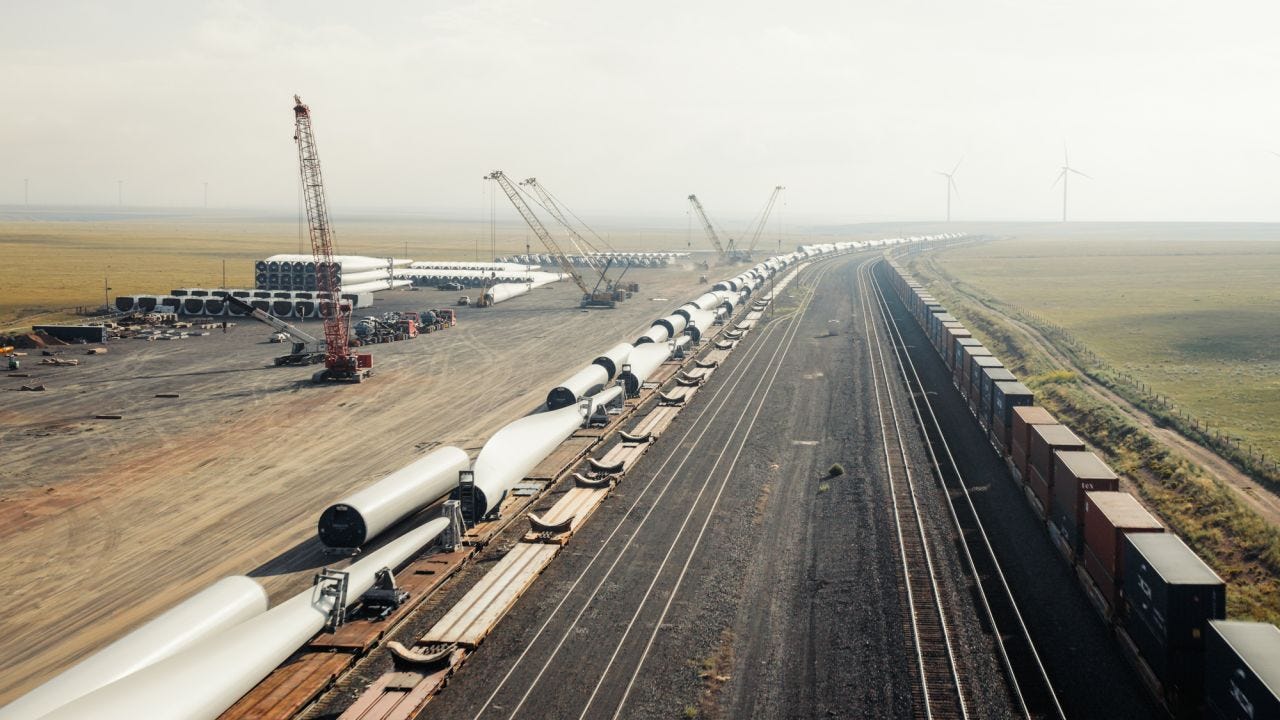
By the way, another curiosity I came across by chance is that Vestas has announced an order for 5 x V135-4.5 MW for a wind farm in Greece. The 135 rotor may look like a typo, but days have passed and no one has corrected it, and some media outlets have already reproduced the information.
Could it be a specific variant for this project? Considering there are only 5 machines, it would be unusual…

🗺️ The map that shows Germany’s more than 30,000 wind turbines
One map to rule them all. Through a LinkedIn post by Thomas Simons, I discovered the existence of a map that displays more than 30,000 wind turbines installed in Germany, both onshore and offshore.
I have to say, I loved the map.
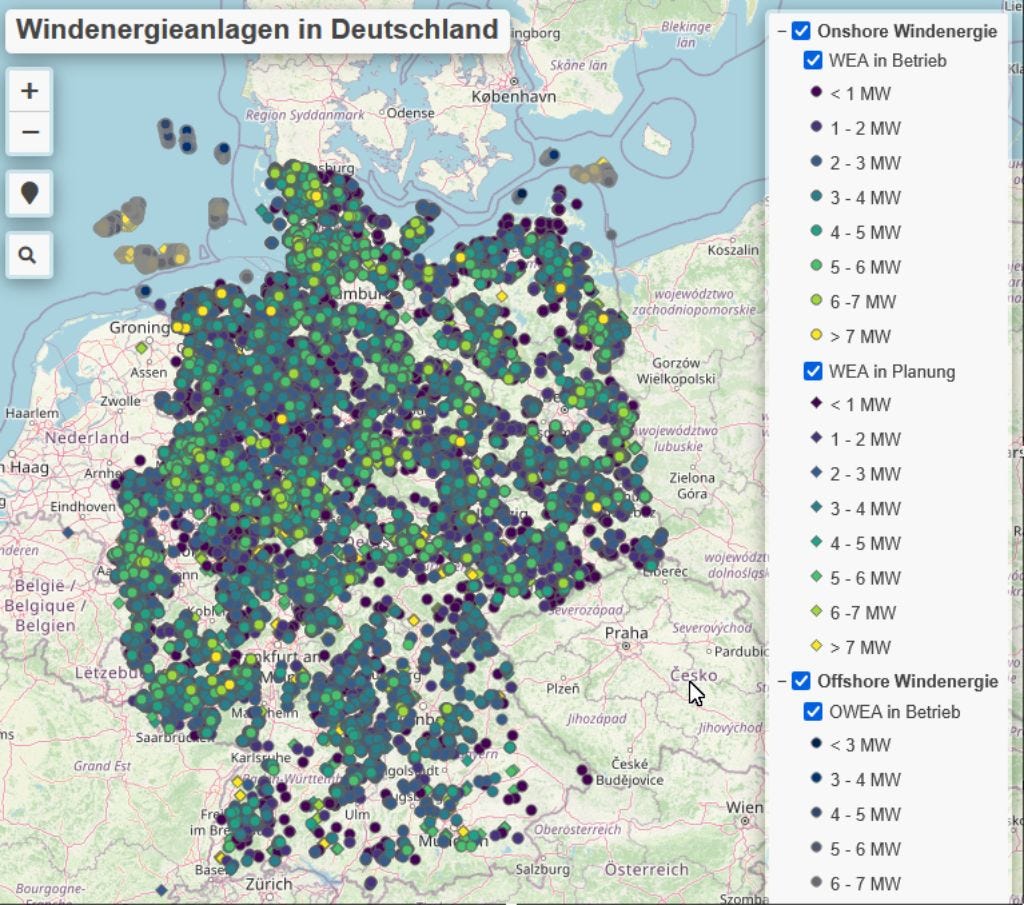
Each turbine comes with detailed information at a click: rated power, hub height, rotor diameter, type, manufacturer, commissioning date, and operator.
The symbols indicate the turbine’s capacity and status (operational or planned).
When will we have a map like this in Spain? I suppose it would require a lot of work, especially gathering all the information regarding coordinates and turbine models, which in many cases, I’d say, is not public.
In Germany, according to the post, this information is publicly available through the federal agency Bundesnetzagentur.
The closest thing that exists in Spain is this map by AEE, but it doesn’t have nearly the same level of detail.
In the comments section, they also mention other maps, such as this one, which provides worldwide information but with less detail, or this other one, which focuses on Germany and features a very cool visualisation.
🚢 Images of the launch of the Eolmed floating platforms
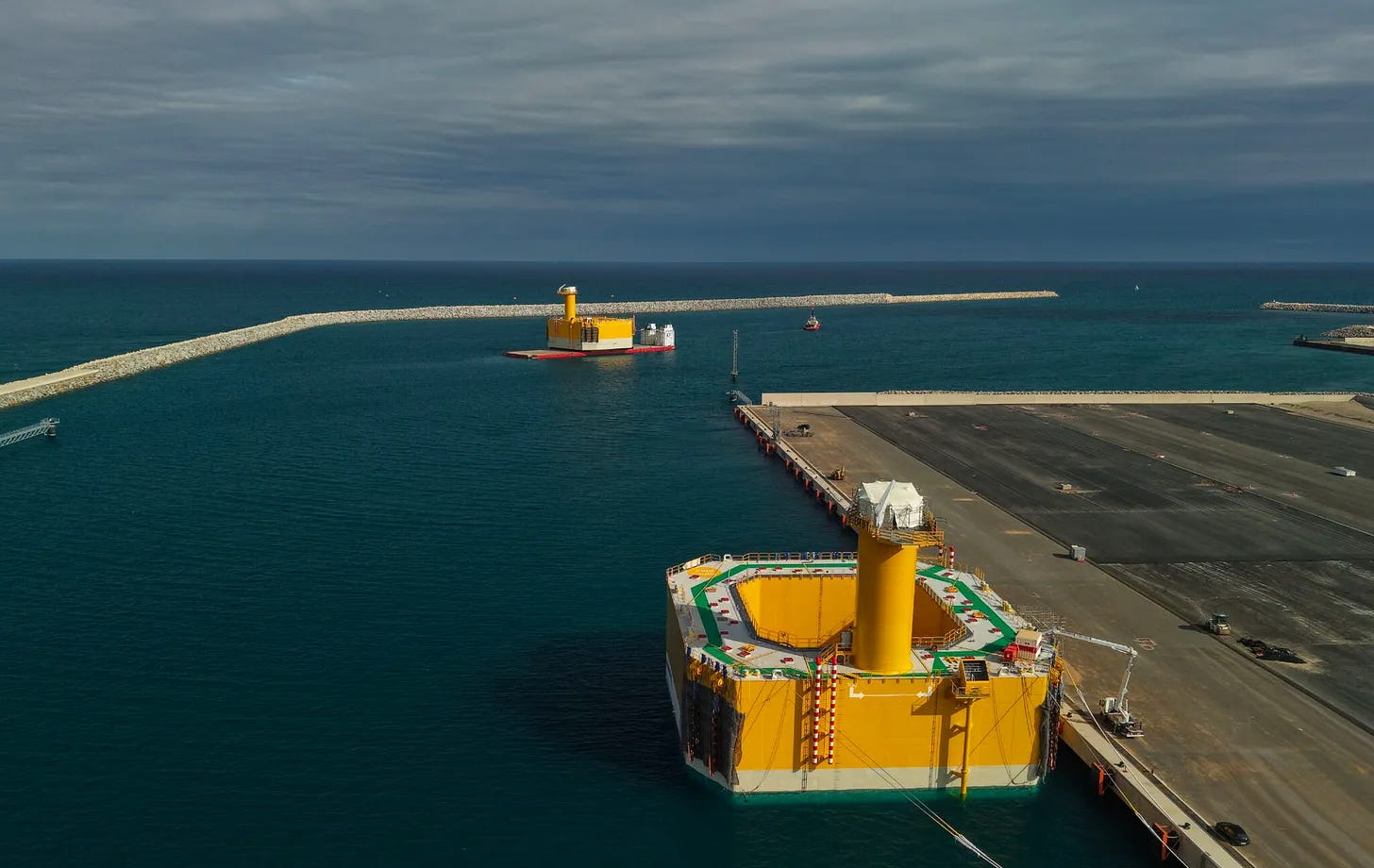
Eolmed is a pilot floating project we’ve talked about several times here. Located in Occitania (France), it consists of three Vestas V164-10.0 MW units mounted on a barge-type floater designed by BW Ideol.
The project is currently in the launching phase of its floating platforms, an impressive manoeuvre that has left us with images like these.
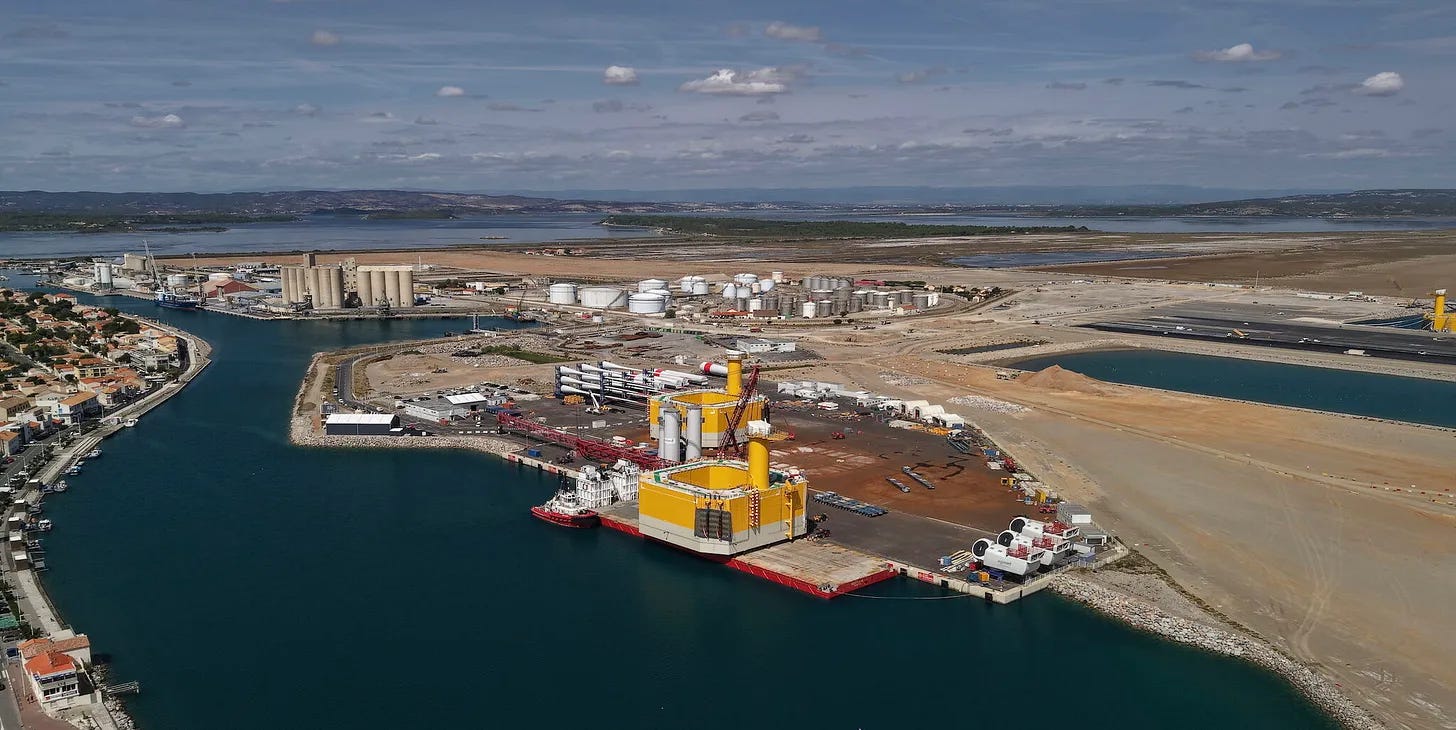
As is common in the floating wind industry, the launch was carried out using a heavy transport semi-submersible vessel. In this type of operation, the floater is placed on the vessel’s deck, which is gradually ballasted by filling its tanks with water until it partially submerges.
When the deck lies below sea level, the floater becomes buoyant on its own, at which point the vessel deballasts and resurfaces, thus completing the manoeuvre.
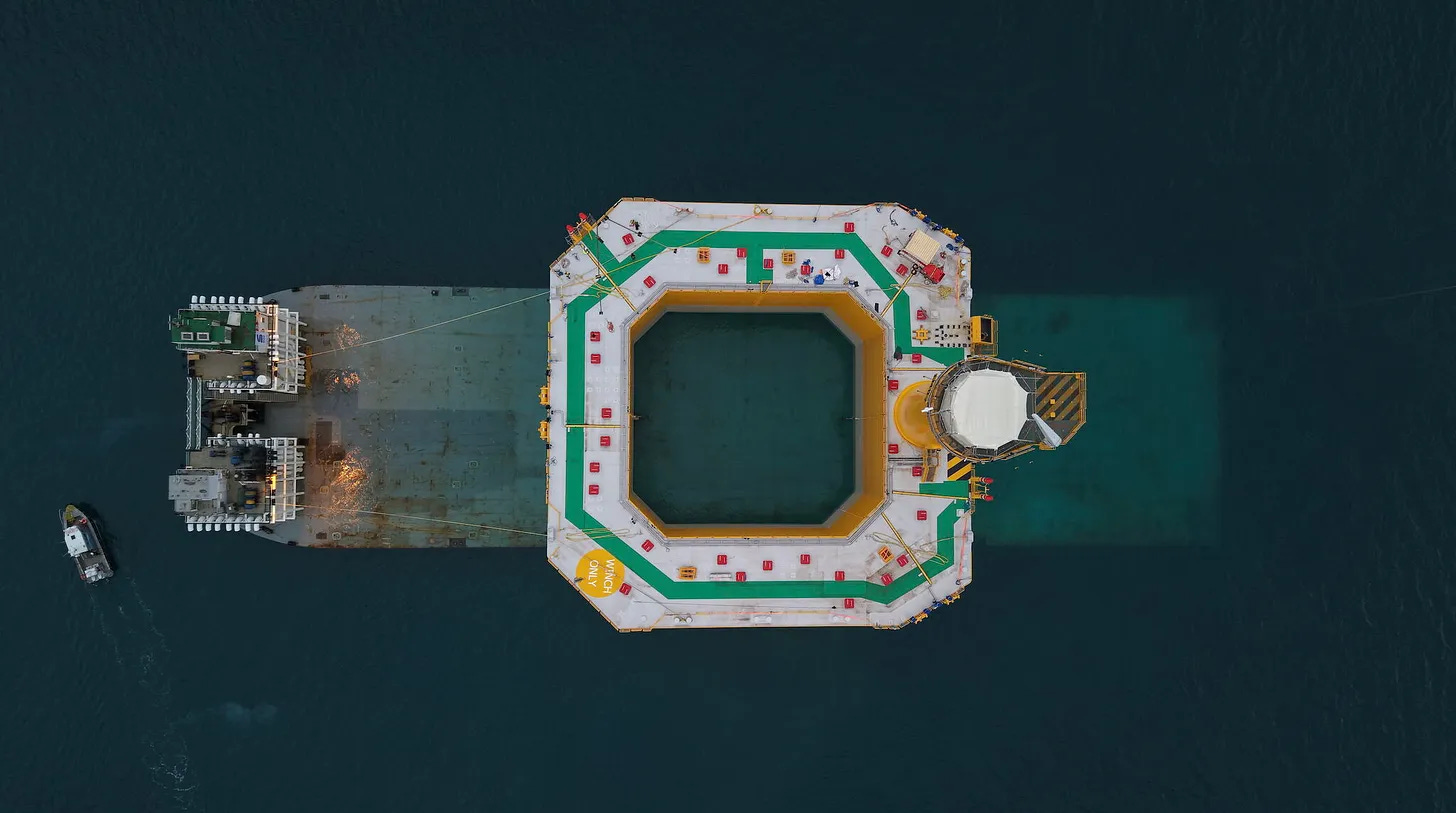
From observation, and judging by the images, it seems that the floating process is carried out in deeper waters outside the port. The reason would be that the semi-submersible vessel needs to reach a considerable draft to allow its deck to be partially submerged.
Afterwards, the floater is towed back to continue with the turbine installation works.
We’ll be keeping an eye on the next steps.

🧱 The return of lattice towers
Ruslan Sokolov, CTO and co-founder of Elawind, has shared a photo that provides a quick overview of many of the lattice or hybrid lattice-tubular tower models currently on the market, or in planning.
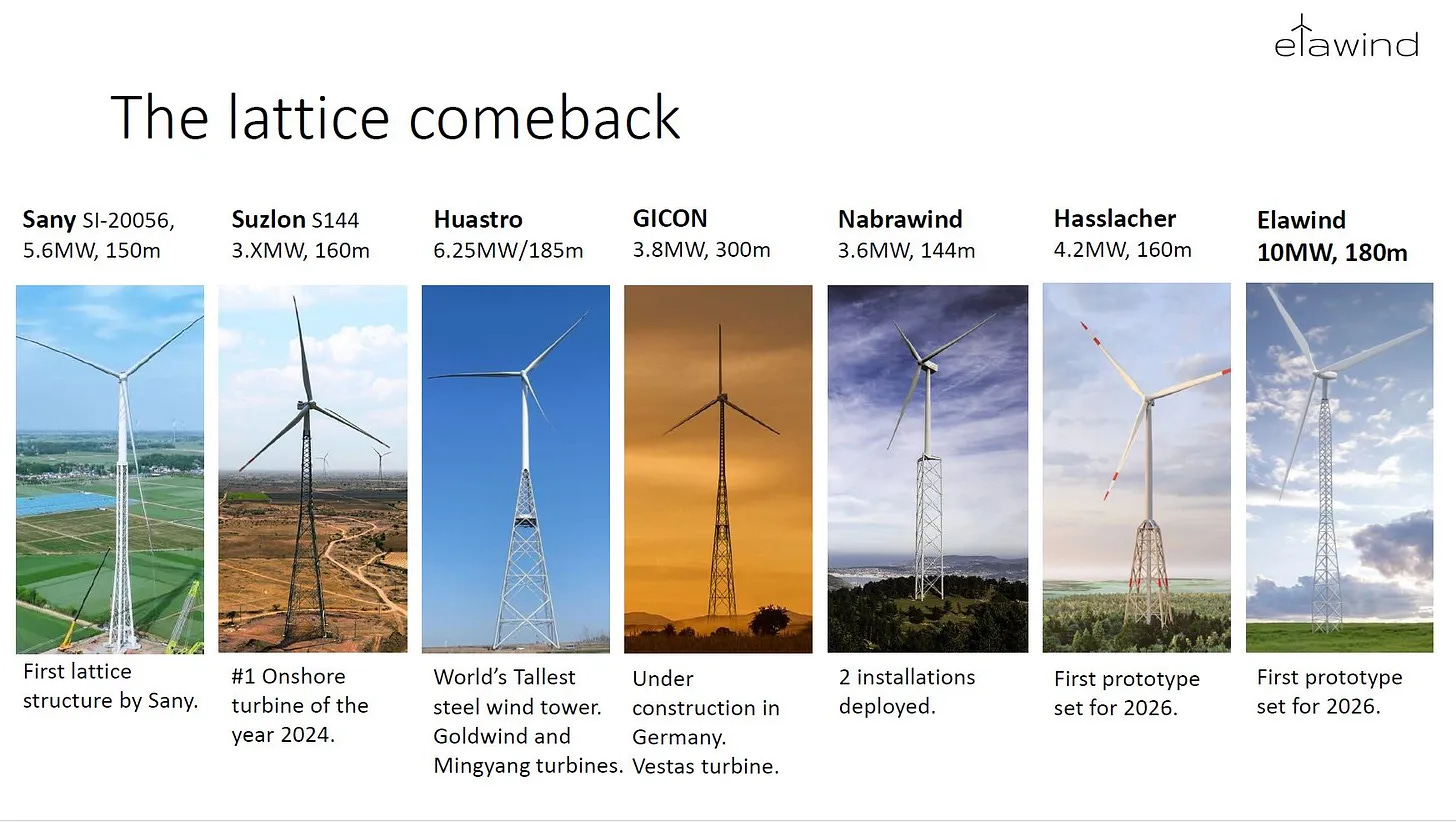
As you know, lattice structures are not new to the sector. In the early days, when wind energy was still an emerging technology, steel tubular towers coexisted with lattice ones.
These lattice designs can still be seen in some places, mainly in the oldest wind farms. But over the years they gradually disappeared, replaced by the practicality offered by tubular steel designs.
However, as the size of wind turbines has increased, these designs have come back into the spotlight, since tubular steel towers face certain limitations when hub heights exceed 150 m.
Honestly, I wasn’t aware there was so much activity in the market around this type of tower. This has opened up a new “rabbit hole” I’d like to dive into at some point and prepare a feature on the subject. One day it will come, so if you don’t want to miss it, subscribe.
🏢 Business in Wind opens new headquarters and it’s probably one of the most iconic in the sector
The Dutch company Business in Wind, specialised in the reuse, dismantling and refurbishment of wind turbines, has recently inaugurated its new headquarters in the Netherlands. And I don’t think I’d be wrong to place it straight in the top three most iconic in the wind sector.
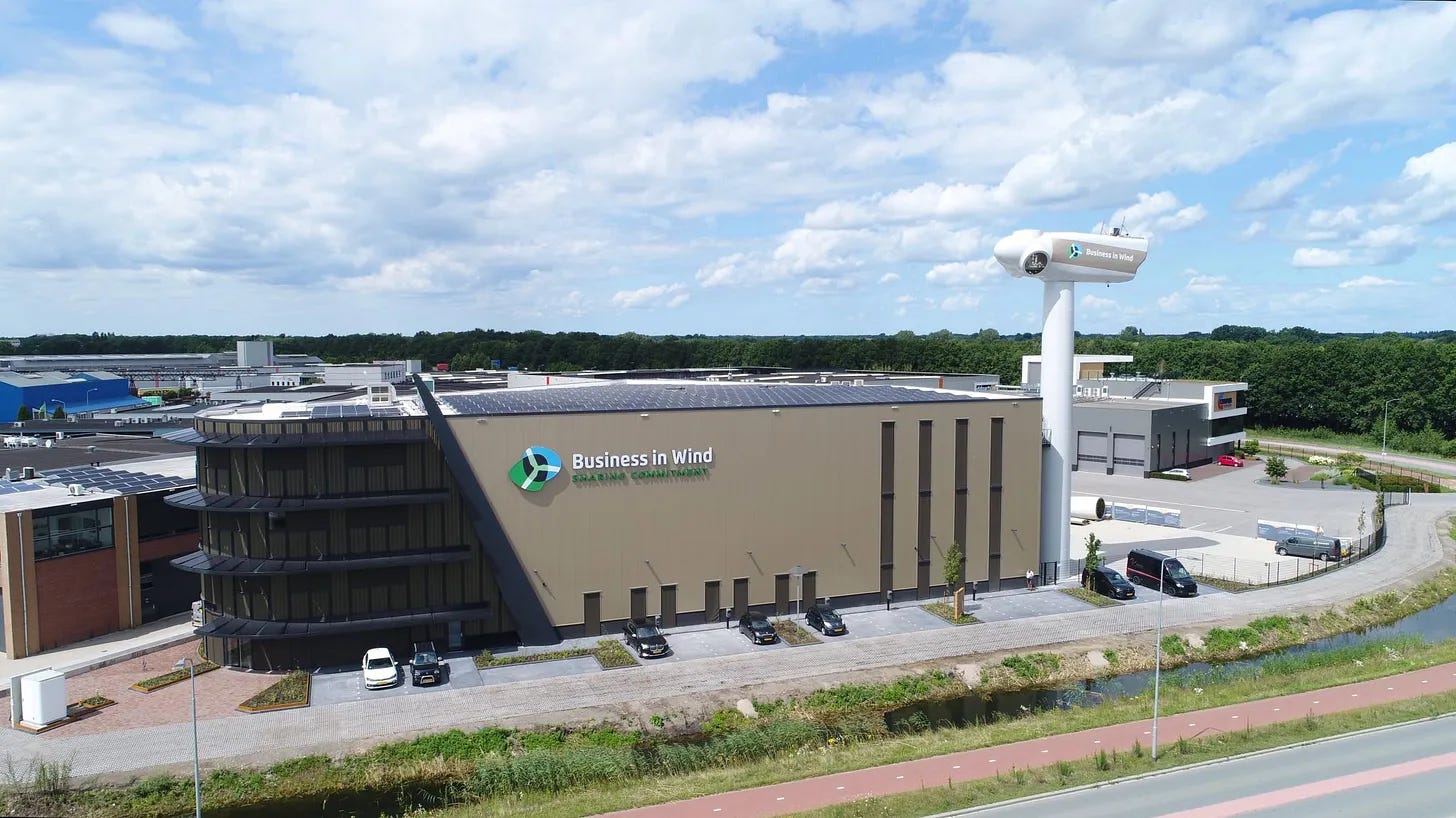
The building itself features modern architecture, though not particularly remarkable. But without a doubt, what stands out most is the wind turbine (or at least the nacelle and a couple of tower sections) installed right next to the building, giving it a unique character.
The nacelle is also visitable, accessible via a spiral staircase. As you can see in the photo below, with the inside of the nacelle still under construction, the fibreglass has been cut to incorporate windows and improve lighting. It has also been fitted with a wooden floor.
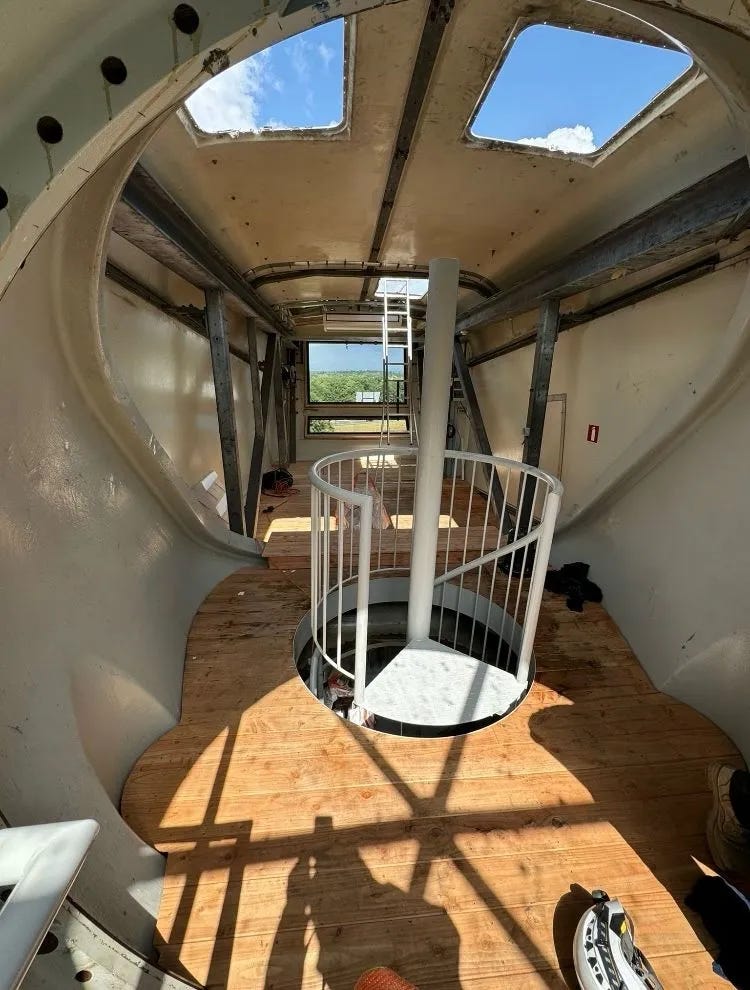
The only question that remains is: will they have a meeting room in there? Will PPE be required to access it? 😂
Do you know of any other headquarters in the sector worth mentioning? I’m all ears.
Thank you very much for reading Windletter and many thanks to Tetrace, RenerCycle and Nabrawind our main sponsors, for making it possible. If you liked it:
Give it a ❤️
Share it on WhatsApp with this link
And if you feel like it, recommend Windletter to help me grow 🚀
See you next time!
Disclaimer: The opinions presented in Windletter are mine and do not necessarily reflect the views of my employer.