

Windletter by Congreso CITE25 - In defence of the European supply chain
Ideas, reflections, and conclusions from the CITE25 Congress, held in Pamplona on October 24.


Hello everyone and welcome to a new issue of Windletter. I'm Sergio Fernández Munguía (@Sergio_FerMun) and here we discuss the latest news in the wind power sector from a different perspective. If you're not subscribed to the newsletter, you can do so here.
Windletter está disponible en español aquí
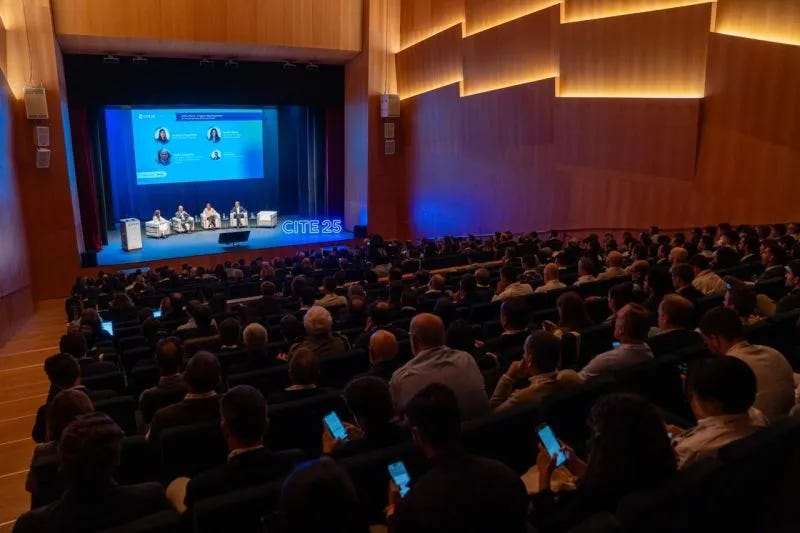
On October 23, the CITE25 (International Energy Transition Congress) took place in Pamplona, organized by Enercluster, and I had the pleasure of attending. More than 40 speakers and 400 attendees sold out the event, which, once again, I believe was a great success.
These congresses are always the perfect place for networking, reconnecting with old colleagues and, of course, learning from high-level round tables and presentations. And, why not say it, also for enjoying the wonderful city of Pamplona (if the schedule allows).
Why Navarra? Navarra is one of the birthplaces of renewable energy in Europe. Some of the main players in the sector, such as Nordex, Acciona Energía or Ingeteam, were born in or have a significant presence in the region.
Around them, an ecosystem of medium and small companies has developed, covering a wide range of specialties (engineering, consulting, power electronics, foundries, O&M, telecommunications...) that today are international benchmarks within the industry.
It was a long day, and it’s not easy (if not impossible) to summarize it in a single article. But, one week later, with the lessons settled and after reviewing my notes (more than once), here are some ideas, reflections, and conclusions.
I’d be delighted if you share yours in the comments.
Let’s dive in.
CITE25 Congress - In defence of the European supply chain
This year, the main theme of the congress revolved around the defence of the European supply chain. The Chinese threat is increasingly present and, despite the various initiatives that seem to be coming from the European Union (such as the NZIA or the CBAM), the truth is that it is hard to see tangible results in the day-to-day reality of companies.
The day began with the usual institutional openings, led by María Chivite (President of the Chartered Community of Navarra) and Jordi Hereu Boher (Minister of Industry and Tourism of the Government of Spain), as well as a short video message from Teresa Ribera, First Vice-President for Ecological, Energy and Competitiveness Affairs and European Commissioner for Competition.
Wind CEOs panel: the Chinese threat
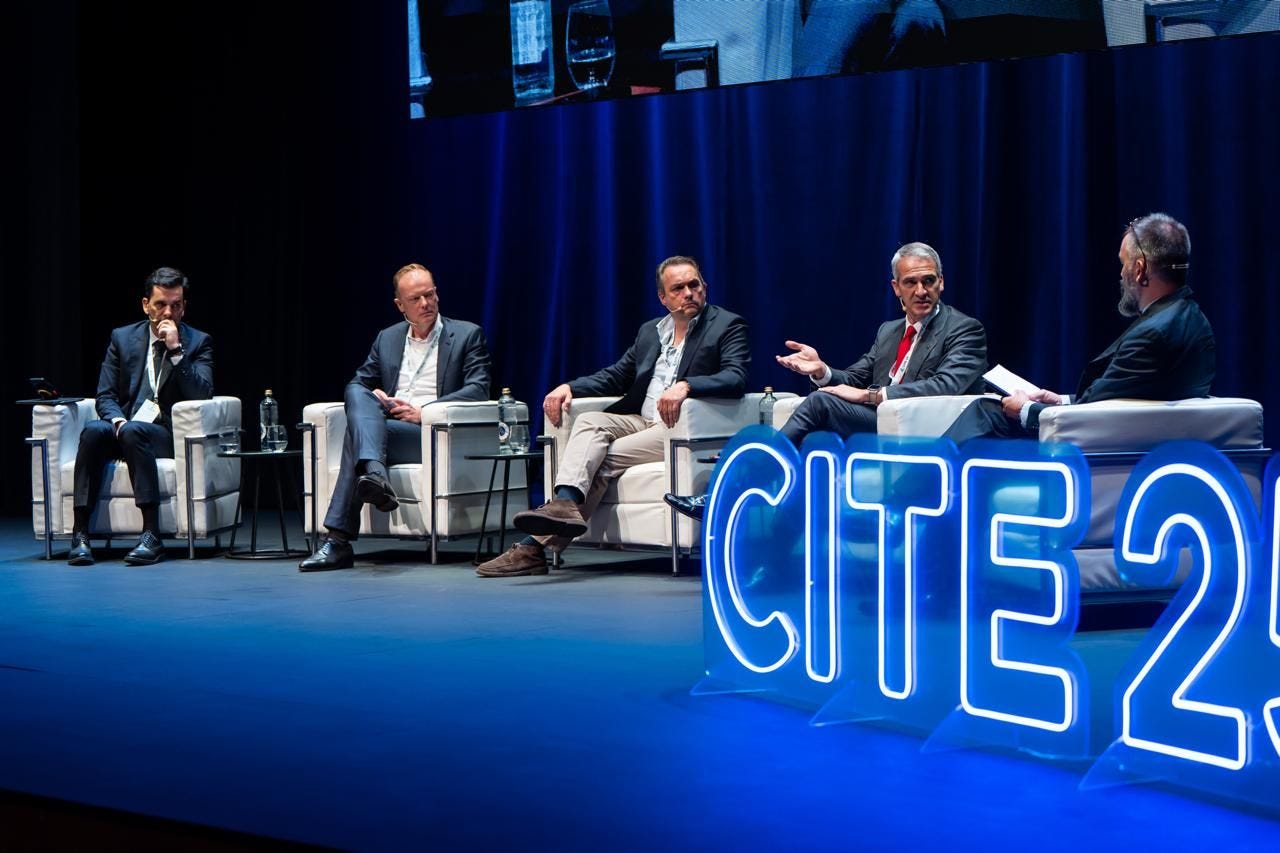
The first round table of the day started strong. Moderated by Brian Gaylord (Principal Analyst, Wood Mackenzie), it featured top-level speakers: José Luis Blanco (CEO, Nordex Group), Torsten Tiefel (CEO, Silbitz Group GmbH), Michael Larsen (CEO, SM Industries), and Adolfo Rebollo (CEO, Ingeteam), who discussed the main challenges facing the European wind value chain.
👉 General message: the need to protect the European wind supply chain and strengthen industrial and technological autonomy was emphasised.
👉 José Luis Blanco mentioned that the CBAM could be a good tool but warned of the risk of harming European interests: if the CBAM, by raising costs, leads to fewer wind megawatts being installed… is it really a good idea? Wouldn’t we, at the end of the day, be reducing fewer emissions?
👉 Michael Larsen stressed how difficult it is to compete in steel products with China, given the volatility and price differences with the Asian giant, which enjoys a major advantage in raw materials and heavy industry.
👉 It was also highlighted that OEMs bear little responsibility for the current situation and for their decision to outsource part of the manufacturing or purchase of components outside Europe. They simply play by the existing rules and must offer competitive products to clients seeking the cheapest possible MWh.
👉 Michael Larsen pointed to policymakers as the main culprits for not adequately protecting the European supply chain through concrete and effective measures.
👉 China’s competitive advantage is no longer based solely on labour costs, but on the size of its domestic market, which enables large economies of scale. While Europe installed 16.4 GW in 2024, China reached nearly 80 GW.
👉 Adolfo Rebollo stressed that the United States is more agile and effective in implementing measures that protect its industry and local manufacturing (such as Production Tax Credits, PTC), while the European Union drowns in its own bureaucracy. If the United States can do it, why not Europe?
👉 The discussion also covered Chinese OEMs, noting that “they are coming, and they are good.” Several markets were mentioned where they have entered strongly, displacing European manufacturers: Latin America, South Africa, Serbia…
👉 A very relevant point concerned the manufacturing and technology of control systems and power electronics. It was warned that Europe must not be naive or surrender its technological sovereignty for minimal economic savings.
👉 Finally, regarding the possibility of Chinese manufacturers setting up plants in Europe, it was reminded that industrial employment is not limited to direct labour but also includes the high-value technological and corporate positions created around product development.
International experiences in defending the renewable value chain
The conclusions of this panel have been summarised by my good friend Imanol Matanza Medina in Solarletter. If they are not yet available when you read this, make sure to subscribe so you don’t miss them.
☕ Coffee break☕
Developers’ CEOs panel: between negative prices, curtailments and permitting hurdles
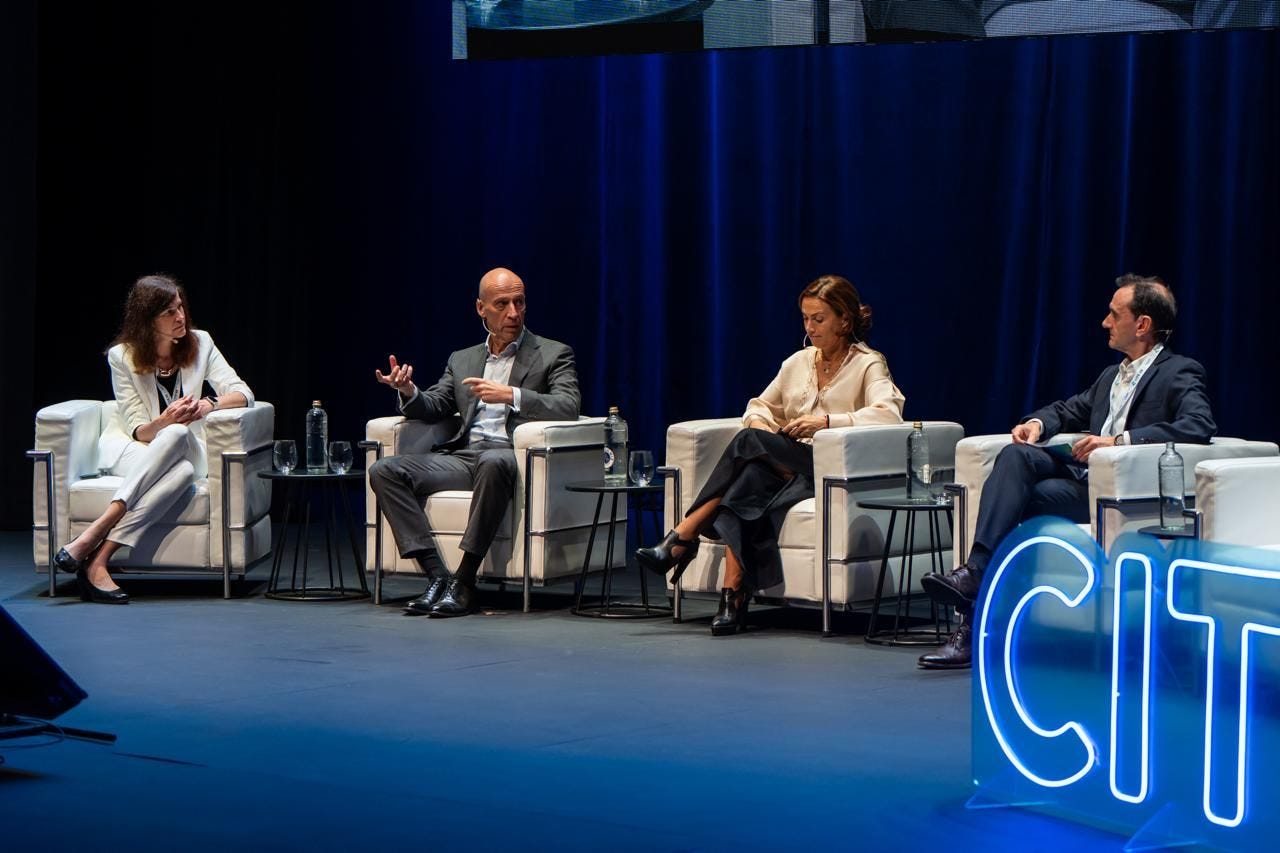
Moderated by Kiko Maza, Communications Director at Enercluster, the panel brought together the top executives of three of the leading companies in the sector: Arantza Ezpeleta (CEO, Acciona Energía), João Costeira (Executive Managing Director, Low Carbon Generation, Repsol) and Rocío Sicre (General Manager, EDP Renováveis Spain).
On the table, a wide range of topics: permitting bottlenecks, zero or negative prices, curtailments, stagnant demand... and João Costeira, who was undoubtedly the liveliest voice in the debate, unapologetically defending Repsol’s position.
👉 Rocío identified from the start the main issues developers are facing: lack of grid access and capacity auctions, demand that fails to take off, and increasingly tight profit margins.
👉 Arantza made a very interesting observation: so far, it seems we have been racing to install generation capacity, but not to transform the power system—which is what we truly need. Grid development and demand growth must advance at the same pace as new generation capacity.
👉 João, for his part, pointed out that in the current context, only the truly solid projects will move forward (those with good resources and low infrastructure costs), and reminded the audience that “not all MWh are equal”, referring to the massive solar penetration that has driven prices down in the central hours of the day.

👉 Data centres were also discussed, and none of the speakers considered them a bubble, though they agreed it’s necessary to ground some of the dizzying figures circulating in the sector. In any case, all agreed that administrations should facilitate their installation.
👉 Regarding the need for auctions, opinions varied. João was clear: “I prefer market to state”, noting that there is currently strong appetite for wind PPAs that can offer attractive returns. He also commented that solar “doesn’t need auctions,” but that they are necessary to incentivise batteries, referring to the long-awaited capacity market.
For their part, Rocío and Arantza described auctions as a useful tool but insisted they must include clauses that make them truly attractive. The latest experiences in Spain have shown that, in practice, the market has been a more effective route.
👉 Floating wind was also mentioned. Rocío suggested that it would be interesting to promote a pilot project, while João summed up the general sentiment in the sector: “once they see the costs of floating wind, the enthusiasm will fade. It only makes sense if the goal is to build an industrial value chain.”

👉 On the European supply chain, João explained the developers’ perspective: “we play by the rules; the key is that they’re the same for everyone,” referring to the well-known phrase “don’t blame the player, blame the game”.
He added something particularly interesting: “we need to reflect the real costs of the measures being implemented”. Perhaps the LCOE with a Chinese supplier is lower, but if you consider the entire value chain, the workers, the taxes, and the wealth generated, is it really cheaper?
👉 Finally, regarding political and regulatory changes, particularly in the United States, it was noted that regulatory uncertainty does not help and may stall investment. Even so, it was highlighted that the market maintains a strong appetite for cheap electricity, regardless of whether it comes from renewable sources or not. And today, wind and solar can provide it.
For my part, I was left wanting to pose a question or reflection, which I’ll take the opportunity to share here, in case someone wants to pick up the glove:
Is it time to ask for differential regulatory treatment for wind energy?
It’s no secret that Spain has a permitting problem, with a very low project survival rate. Today, it’s extremely difficult to bring a wind project to the ready-to-build stage.
To make matters worse, there is hardly any available grid capacity, with most megawatts tied up by plants (many of them solar) that may never be built. As a result, many projects “die,” while the Spanish wind pipeline is not being replenished with new developments. Securing grid access is practically the first step, and without it, the rest of the development process cannot move forward.
And yet, the Spanish grid still has room for many more wind megawatts. The captured price for wind remains reasonable, and large consumers continue to show strong appetite for wind PPAs. In addition, we all know the industrial and strategic importance of the wind sector, both nationally and at the European level.
Are these arguments enough to justify differential treatment? Is it time for the sector to proactively demand it?
Measures such as capacity tenders with priority for wind or specific wind auctions could be a step in that direction.
I’d love to hear your thoughts.
🥪 13:45 Networking Lunch 🥪
After lunch, the congress split into two parallel panels: O&M and Energy Storage.
I stayed in the O&M session, while Imanol Matanza Medina attended the Energy Storage panel, whose conclusions you can read in Solarletter. If they are not yet available when you read this, make sure to subscribe so you don’t miss them.
O&M panel: lack of talent, repowering and more
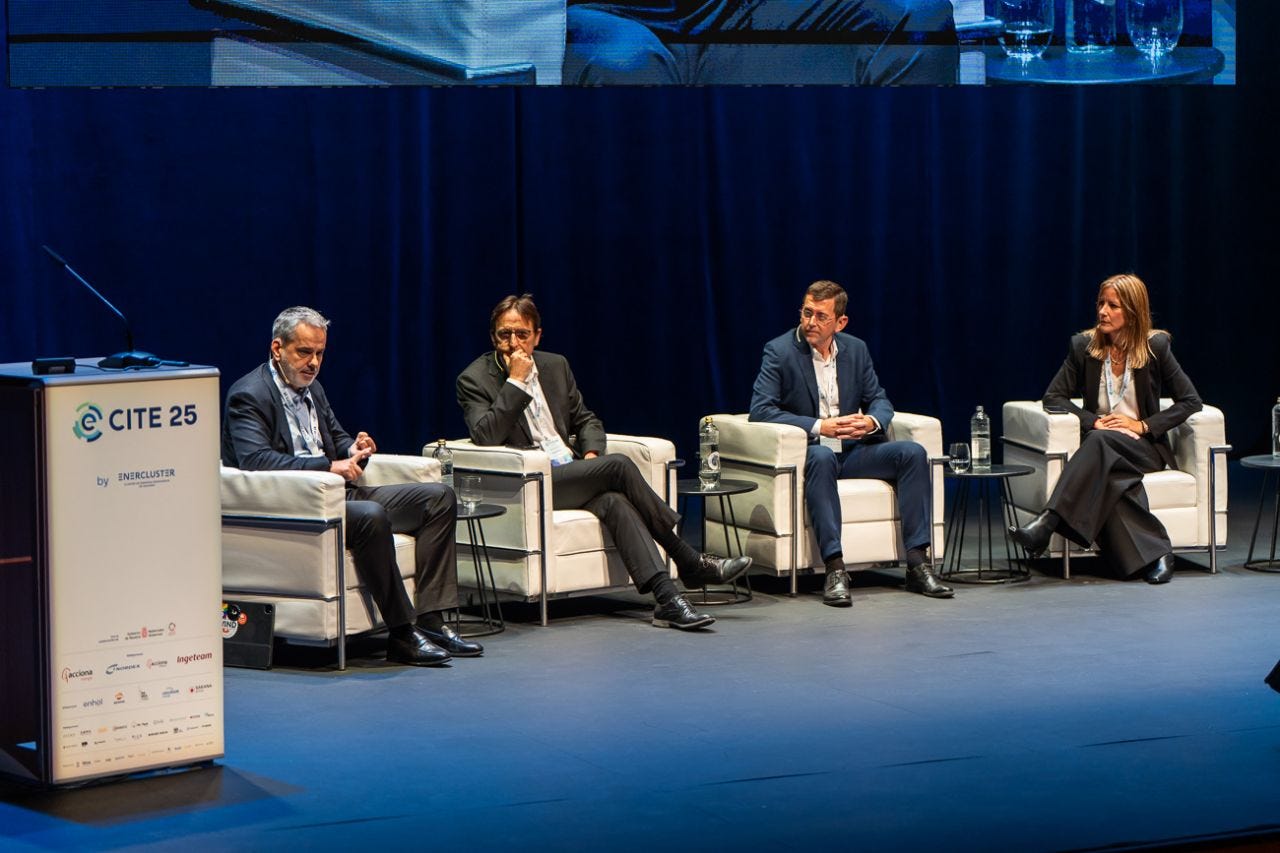
The O&M panel brought together Eduardo Medina (CEO, RES), Juan Otazu (Production Director, Acciona Energía) and Javier Amelivia (Wind CEO, SPIE), in a session moderated by Elisa Manero, President of AEMER.
Sometimes it seems that the sector is focused solely on taking projects to ready-to-build, constructing them, and commissioning them. However, the reality is that what comes next are 20 or 30 crucial years of operation and maintenance, essential for ensuring the asset delivers what it promised.
👉 The first and most mentioned challenge of the session was undoubtedly the shortage of personnel faced by the wind O&M sector. Moreover, training requirements are becoming increasingly demanding, making it more difficult, slower, and more expensive to prepare new technicians. As a result, it was emphasised that training is key—but it must be reasonable.
The shortage of vocational training slots was also mentioned, especially in areas highly demanded by companies such as electromechanics.
👉 The sector also faces a talent retention problem, with qualified technicians leaving their positions after a short time instead of developing a long-term career within the industry. In this regard, it was stressed that “it’s essential to pay technicians well,” and therefore, asset owners must also compensate contractors appropriately, as they are part of the same team.
“If contractors are squeezed too hard, the asset will end up paying for it,” remarked Otazu.
As Eduardo Medina explained, the problem lies in the fact that, as electricity market prices fall, many asset owners try to cut O&M costs, which is counterproductive. Yet, an improvement in AEP of just 1% can have a huge positive impact on the financials.
👉 All participants agreed that Spanish technicians are the best in the world and are always the ones called in when complex problems arise.
Juan Otazu shared an anecdote about a team of 18 Spanish technicians who travelled to the United States to restore a wind farm recently acquired by Acciona Energía: in just one day, they managed to restart a turbine that had been offline for nine months.
👉 A particularly interesting point was how little progress the sector has made in analytics and data management. Eduardo Medina said he “had to laugh” when hearing about AI in O&M, considering how far behind the sector still is in digitalisation. He also criticised the lack of transparency from OEMs, who are too secretive and protective of data.
“Collaborating and sharing data openly and in a standardised way is a huge opportunity for the sector. The asset owners are the data owners, not the OEMs,” he stated.
👉 Finally, the discussion turned to repowering, although, as expected, both Eduardo and Javier defended extending the life of assets whenever availability and costs remain at reasonable levels.
From my humble point of view, I believe the sector should be a bit more flexible when it comes to training and certification. The GWO is a clear example of this. For someone who has never climbed a turbine, I find it a very useful course as a first introduction and to learn the fundamentals of safety.
However, for people with experience who climb every week, or for profiles who have already climbed several times but do not perform maintenance work as such, the biannual renewal honestly seems excessive to me and should be made more flexible in some way without compromising safety. And I say this with first-hand experience.
And now, it seems there are plans to create a sort of “solar GWO” which, to be honest, didn’t convince many of those present either.
I’d be glad to hear your thoughts on this.
After that came the panels on Grid and Green Hydrogen. This time, I stayed to cover the Grid one, while the analysis of the Green Hydrogen panel can also be read in Solarletter. If they are not yet available when you read this, make sure to subscribe so you don’t miss them.
Grid panel: investment in networks and system operation
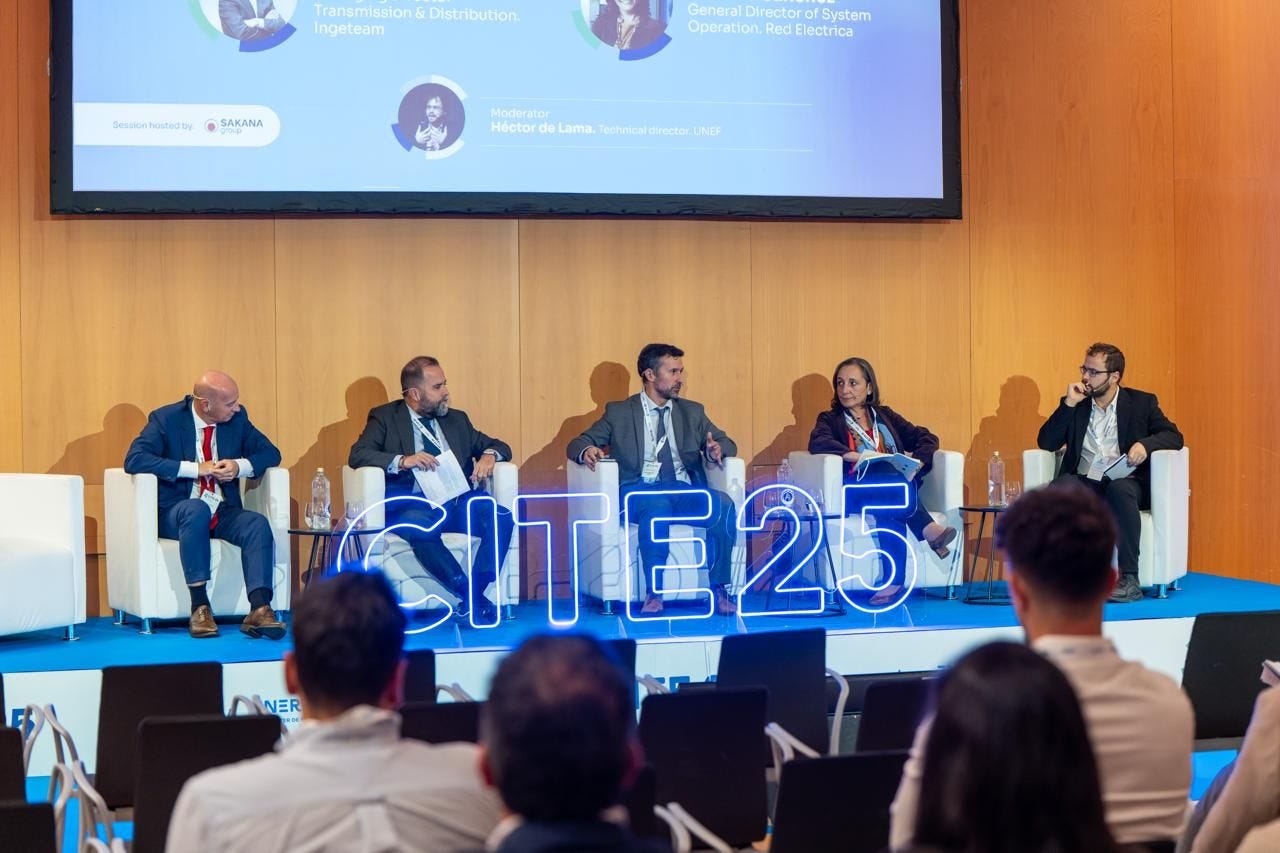
A high-level panel moderated by Héctor de Lama (Technical Director, UNEF), which brought together Concha Sánchez (General Director of Operation, Red Eléctrica), Alfredo García-Borreguero (Managing Director Spain, Hitachi Energy), Eduardo Pedrosa (Managing Director Transmission & Distribution, Ingeteam) and José Manuel Pérez (Director of Regulation, EDP España).
👉 It was highlighted that there is still capacity to integrate more renewables, especially wind but also solar, as long as storage is included. However, the permitting process for transmission networks remains very slow, which delays the expansion and modernisation of the system.
👉 Ingeteam and Hitachi expressed satisfaction with the new announcements of investment in grids and mentioned that they are expanding their factories in Spain. Ingeteam also highlighted that it is ready with technologies such as synchronous condensers and STATCOMs, which are essential to enable renewable integration and voltage control.
👉 Concha Sánchez spoke about the measures implemented after the blackout (the so-called “reinforced operation mode”) and the growing role of renewables in voltage control, mentioning the now well-known P.O. 7.4, which is expected to be fully operational at the beginning of next year, when dozens of plants will already be enabled. This should reduce the cost of technical restrictions that has sparked so much discussion.
👉 José Manuel Pérez stressed that the remuneration of distribution networks should be aligned with that of other European countries to encourage infrastructure investment. Concha, meanwhile, emphasised the importance of making use of existing networks, since deploying new lines is extremely costly. Improvements are planned for thousands of kilometres of already installed lines.
👉 Concha also mentioned that grid-forming and synthetic inertia are issues for a somewhat more distant future, which will progress as greater regulatory clarity is achieved at the European level.
☕ Coffee break☕
Keynote: challenges and opportunities for the European renewable industry in the current geopolitical context
The conference concluded with a keynote by Yana Popkostova, founder of the European Centre for Energy and Geopolitical Analysis (ECEGA), who analysed the challenges and opportunities facing the European renewable industry in the current geopolitical context.
👉 She warned that Europe is facing a decisive decade: it must choose between leading the energy transition or depending on external powers. She denounced market fragmentation, excessive bureaucracy and the loss of industrial capacity, reminding that China produces eight out of every ten critical technologies.
👉 She called for the reindustrialisation of Europe, investment in resilient electricity grids and the simplification of regulations to restore competitiveness. “Europe’s renewable future will not be achieved with targets on paper, but through real action and coordination.”
Institutional closing: “The future belongs to those who build it”
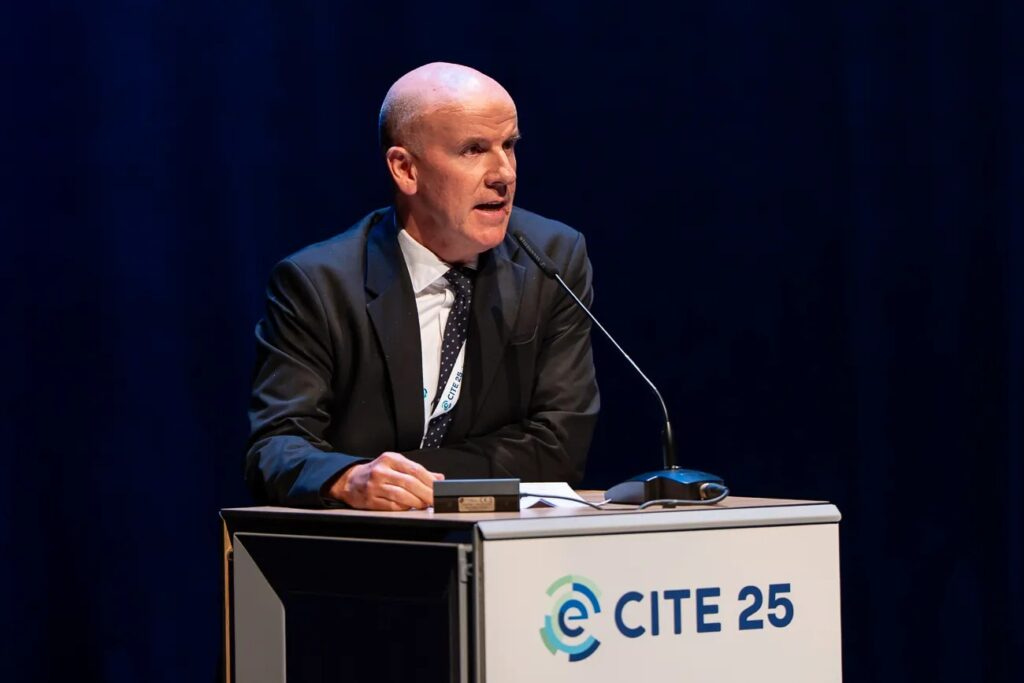
The event ended with the institutional closing remarks by Aitor Erquicia, president of Enercluster, and Mikel Irujo, Minister of Industry and Ecological Transition.
👉 “The future belongs to those who build it. We are playing for our autonomy and must focus on opportunities,” declared Aitor, highlighting Enercluster’s commitment to fostering alliances and cooperation between companies and institutions.
👉 For his part, Mikel Irujo called on the European Union to take urgent measures to ensure the future of the wind sector and strengthen Europe’s industrial competitiveness.
Personal thoughts
👉 The organization. It seemed hard to surpass the 2023 edition, but honestly, I think they did it. The days are long, yes, but for me they go by quickly.
👉 The speakers. The presentations at the conference are of the highest level, with CEOs from the main companies in the sector—something far from easy to achieve given their tight schedules.
👉 On a personal level. As always, I leave with a very good feeling from the event. Both for everything I learned and for meeting again with people and having interesting conversations.
👉 Navarra and Pamplona. I said it two years ago and I’ll say it again: I’m an absolute fan of Navarra, its people, and its ecosystem around the renewable sector. May it last for many years. Let’s fight for it and take care of it.
Lastly, I cannot finish without thanking the CITE Congress for trusting Windletter.
See you in 2027!
Thank you very much for reading Windletter. If you enjoyed it, I invite you to subscribe, hit the ❤️, forward it by email, share it on social media, or recommend it to others.
You can follow Windletter on Twitter and LinkedIn, and you can contact me through my Twitter or LinkedIn profile.
See you next time!