

Windletter by Nabrawind – 10 years innovating in wind energy
Nabrawind turns 10. We celebrate by looking back at the company's history and looking ahead to the future of this innovative firm from Navarra.

Hello everyone and welcome to a new issue of Windletter. I'm Sergio Fernández Munguía (@Sergio_FerMun) and here we discuss the latest news in the wind power sector from a different perspective. If you're not subscribed to the newsletter, you can do so here.
Let’s go today with an edition sponsored by Nabrawind. As many of you already know, Nabrawind is one of Windletter’s main sponsors and probably needs no introduction for most of our readers.
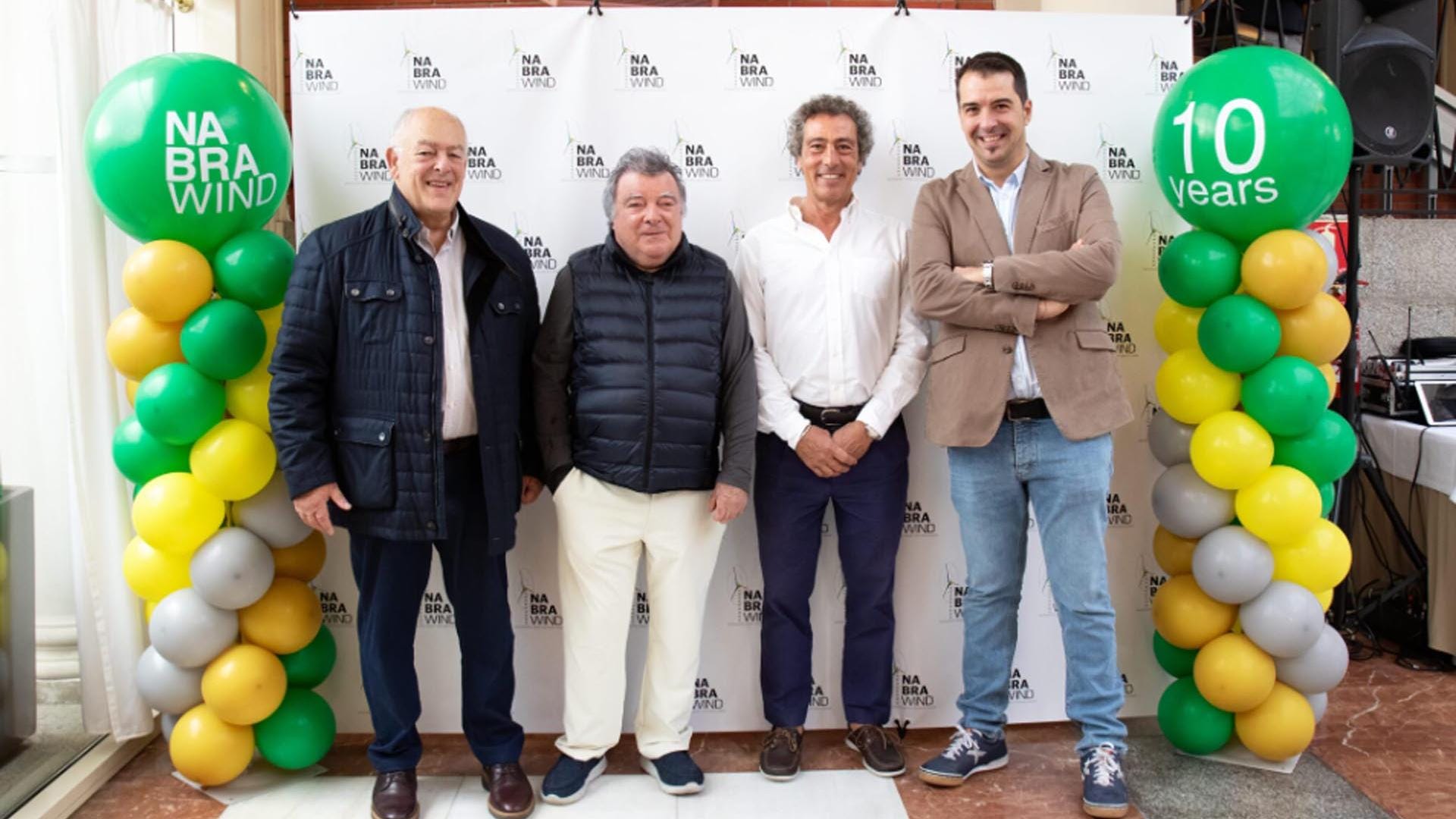
But for those who aren’t familiar with them, Nabrawind is a company based in Pamplona that has just celebrated 10 years of history innovating in the wind sector.
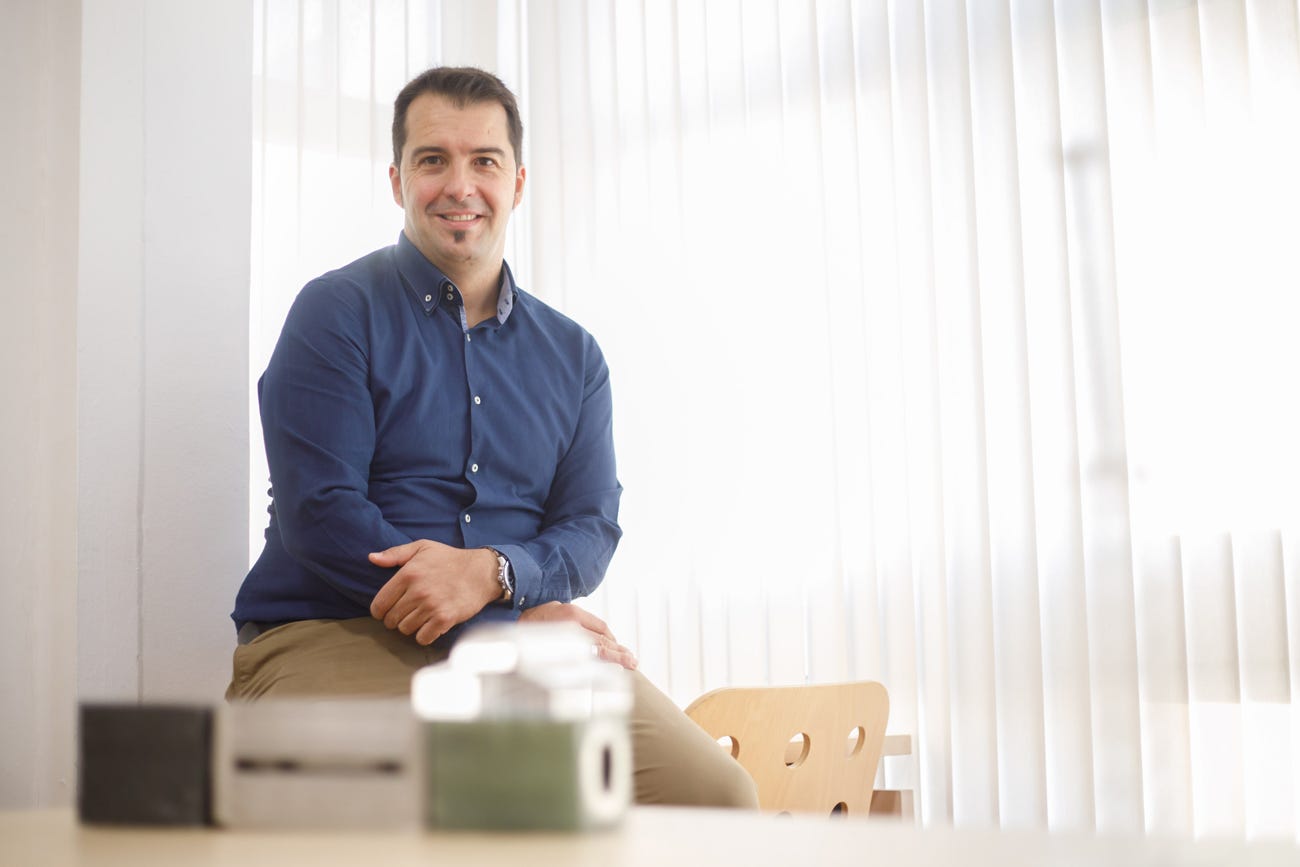
To mark this 10th anniversary, we spoke with Eneko Sanz, CEO of Nabrawind, to look back at the company’s journey, its range of products, and its future plans.
Nabrawind celebrates 10 years innovating in wind energy
The wind power sector has undergone a remarkable journey of innovation over just two decades. From the early experimental wind farms of the 1990s to today’s >7 MW turbines, technological progress has drastically reduced the cost of energy and turned wind into a cornerstone of the energy transition.
In recent years, however, the sector has taken a more conservative turn. This is partly due to the financial situation of several OEMs and also due to the maturity the industry has reached. Although patent activity remains high, it has become harder for innovations to reach commercial status, mainly because there are fewer resources available for development investment, at least outside China.
Against this backdrop, Nabrawind has taken a very different path. Born in Navarra ten years ago, the company has proven there is still room to push boundaries. In just one decade, it has gone from being a small idea lab to an internationally recognised player, with proprietary technologies and products, a growing order book, and a team that has grown tenfold.
From Evoluwind to Nabrawind: the origins of an ambitious idea
The story of Nabrawind began to take shape shortly before 2012, when Odilon Camargo started envisioning large-scale wind turbines mounted on three-column towers. Odilon has been a pioneer in wind technology since the 1980s in Germany and a key figure in its development in Brazil in recent decades.
He shared this idea with Hely Ricardo Savio, a fellow aeronautical engineering schoolmate who, after a long career in the aerospace sector, was also working on wind technology. Around the same time, Eneko Sanz left Gamesa at the end of 2012, after several years leading various technology developments at the company.
A few months later, in March 2013, after a conversation with Hely Ricardo Savio, Eneko’s former colleague at Gamesa, the two began developing the initial concepts inspired by Odilon’s vision.
Thus, between two Brazilians and a Navarrese, the seed of NA – BRA – WIND was planted. For those who don’t know yet, the name comes from the combination of Navarra + Brasil + Wind, a reflection of the project’s roots and essence.
Eventually, Iñaki Alti joined the team, an Intellectual Property expert with extensive experience at Gamesa Aeronáutica and Gamesa Eólica, where he had worked with both Ricardo and Eneko. Iñaki, from Bilbao, played a key role in fast-tracking the filing of all the initial patents, though the company’s name was never changed afterwards.
The original ambition was sky-high: to design a full wind turbine from scratch, one capable of generating more energy in low-wind sites and overcoming the growing logistical barriers already limiting industry progress. “Designing a full turbine from the ground up was crazy and required millions in investment,” Eneko tells us, “but we set out to secure funding anyway.”
In the summer of 2013, the team drafted its first business plan with the goal of securing funding and support from Sodena, the financial instrument of the Government of Navarre, which would later join the project alongside Barinaga as its first partners.
In parallel, they contacted Iñaki Alti for industrial property advice. His knowledge and vision aligned so well with the project that he eventually joined as the fourth co-founder.
It wasn’t until 2014 that the four engineers formally established Evoluwind, the company that would kick off the adventure.
The “building blocks” to get the project off the ground were solid. As mentioned, the founding team already had extensive experience in technology development, particularly in the wind sector:
Odilon Camargo – Aeronautical engineer, pioneer in rotor design for some of the first commercial turbines in Germany. Co-founder of Camargo Schubert Wind Engineering.
Hely Ricardo Savio – Aeronautical engineer (PhD), with experience at Embraer and Airbus. Former Blades Engineering Manager at Gamesa and founder of JADE Systems, later acquired by Tecsis.
Eneko Sanz – Industrial engineer, holder of more than 30 wind energy patents. Led the Innoblade modular blade project at Gamesa and has been General Manager of Nabrawind since 2015.
Iñaki Alti – Aeronautical engineer and expert in Industrial Property. At Gamesa, he created the IP department and managed a portfolio of 400+ patents.
During the initial stage, each founder remained connected to their original company, with Eneko being the only full-time employee of the fledgling Nabrawind: “We agreed on a salary that was just enough to get by,” Eneko recalls. Odilon also played a key role as the first business angel, providing financial support until the first investors came on board.
In the same year it was founded, Nabrawind filed eight PCT applications to protect various technologies related to tall towers featuring an innovative three-column design. The ambition was clear: to rethink the architecture of the wind turbine, its structural components, tower, blade, and foundation, in order to reduce costs and open up new installation possibilities.
It was in 2015 when they closed the deal to bring on their first two investors: Sodena and Barinaga y Alberdi. “The truth is, the first investors were taking a real risk, but their confidence is what made it possible for us to be here today,” Eneko recalls. Later on, in 2019, Basarro and InnoEnergy also joined the project.
In November 2015, the company hired its first employees, including some key members of today’s team. The entry of these initial partners marked a new phase and the consolidation of the Nabrawind Technologies brand, which from then on focused on the certification and industrial validation of its patented products.
A decade of innovation with a Navarrese stamp
After discarding the initial idea of developing a complete wind turbine from scratch, Nabrawind focused its efforts on two disruptive concepts: Nabrajoint (modular blade joint) and Nabralift (self-erecting tower). Both addressed the same issue: the growing complexity and cost of transporting and installing increasingly large wind turbines.
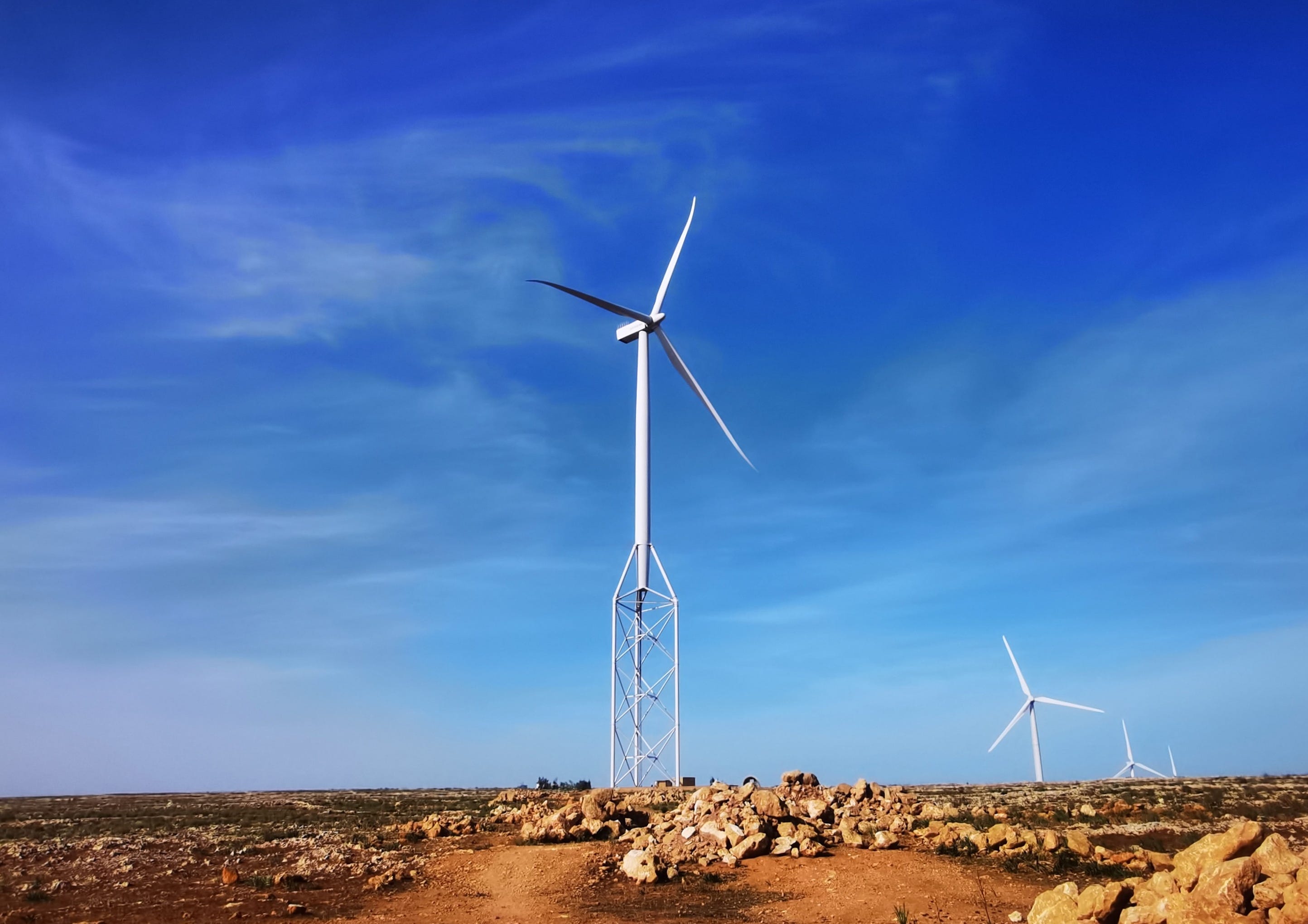
In 2018, the company installed its first Nabralift prototype tower in Eslava (Navarra), a 160 m structure that marked a turning point. At the time, it didn’t have a nacelle on top, but it proved it could be erected without large cranes, reducing both costs and logistical risks. The tower can be seen on Google Street View and in the video below, though it was dismantled later.
That same year, Nabrajoint, the modular blade joint, successfully completed its certification tests, proving the technical feasibility of modularity for blades over 70 m long, with an extremely strong connection. However, modular blades have yet to gain commercial traction. “I’m convinced we have the best solution, but for now the market has found other ways to tackle the logistical challenges,” Eneko explains.
In the following years, Nabrawind expanded its portfolio with Nabrabase, a modular foundation system that brings the benefits of Nabralift to standard-height towers; BladeRunner, a blade installation and removal system that eliminates the need for large cranes; and Skylift, an evolution of its self-erecting system adapted to tubular towers and high-wind sites.
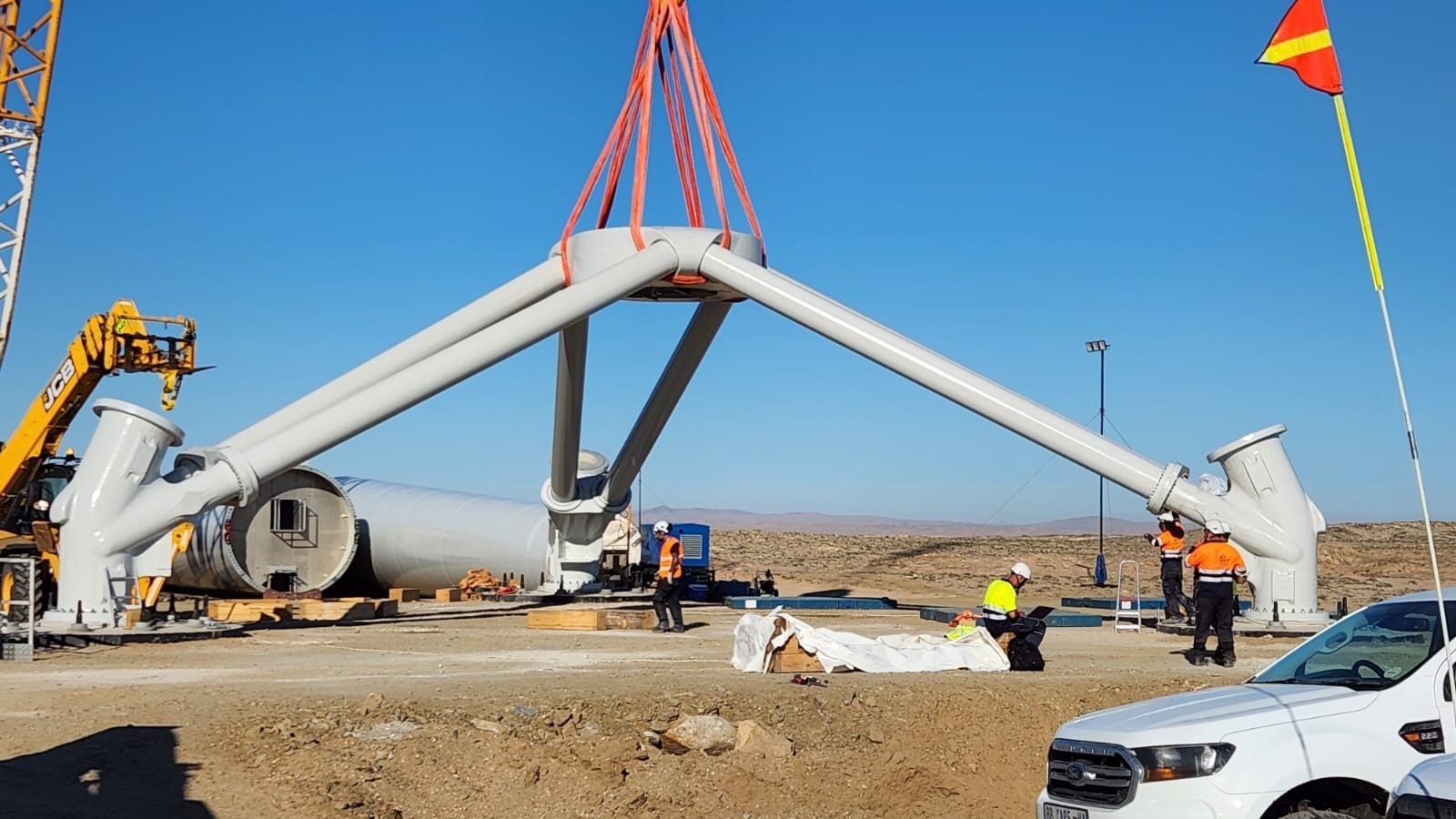
In recent years, the company has expanded its innovation structure with the creation of its R&D&I Unit (2025) and the Nabrawind Chair at the Public University of Navarre (2024), strengthening its ties with the local scientific ecosystem.
From R&D to commercial product
Between 2019 and 2022, the company entered its first phase of commercial expansion, launching its first commercial projects. The French developer Innovent became its early adopter, installing Nabralift towers in Morocco (including the tallest in Africa), Nabrabase foundations in France and Namibia, and testing the BladeRunner system in both France and Morocco.
To scale up its tower self-erection capabilities, Navassy (Navarra Assembly) was established in 2020 as a joint venture with fellow Navarre-based companies Comansa and Tetrace, forming a strategic alliance that remains essential today for the development of large-scale self-erecting towers.
More recently, Nabrawind completed its first multi-turbine wind farm in Namibia (2025) for Innovent, featuring four towers and Nabrabase foundations anchored directly into rock.
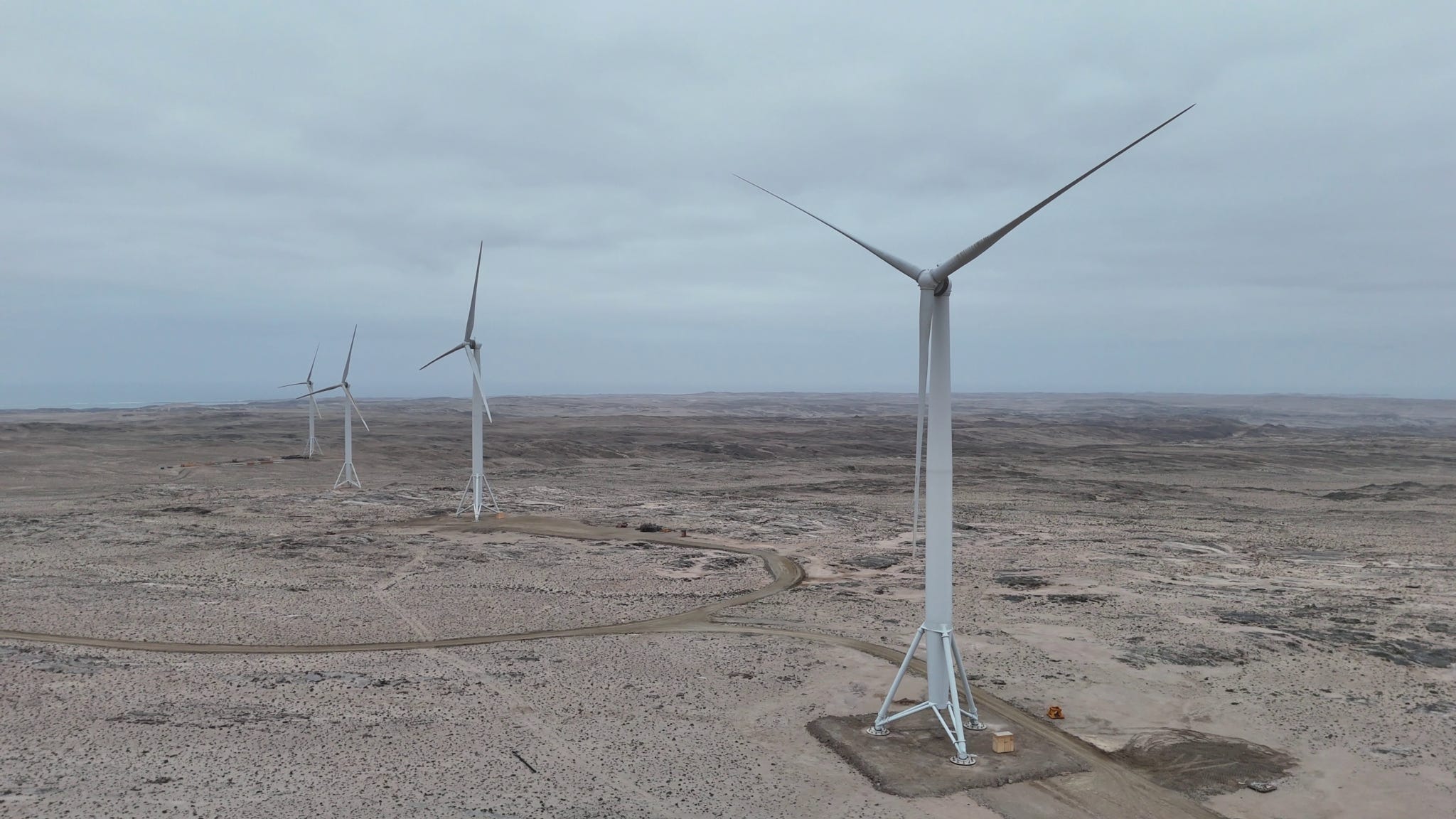
BladeRunner, for its part, is proving to be a commercial success. It has already been used in five countries (France, Spain, Morocco, the U.S., and Mexico), adapted to multiple turbine models, and is currently being deployed in Argentina, the Dominican Republic, and Brazil.
In fact, Nabrawind has signed a framework agreement with a global OEM to roll out BladeRunner across its extensive fleet, using a modular strategy that allows the system to be standardized for all its wind turbine models.
As for Skylift, the first commercial contract is currently underway in Namibia, where seven self-erecting tubular towers are being assembled with Goldwind GW165-6.2 MW turbines. Images shared by Innovent already offer a glimpse into the progress of the project.
According to Eneko, “in this particular project, Skylift’s assembly advantages under windy conditions are key, as the site barely offers weather windows below 6 m/s that would allow installation with standard cranes.” Skylift enables tower erection in winds of up to 15 m/s, while BladeRunner allows blade installation up to 12 m/s, significantly increasing the available construction windows, an especially valuable advantage in high-wind locations.
Throughout this journey, Nabrawind has also obtained several certifications from prestigious institutions that strengthen the credibility and reliability of its product portfolio. For instance, the Nabralift 3.Max tower, designed for turbines up to 8 MW, was recently certified by UL as maintenance-free under the IECRE standard for wind turbines up to 8 MW.
A company growing without losing its essence
Today, Nabrawind directly employs 71 people (21 women and 50 men), in addition to 14 regular collaborators and 3 interns. In total, 88 professionals are stably involved with the company, one third are women, and more than half are graduates from the Public University of Navarre.
Growth forecasts suggest the addition of 20 more employees in the coming months, both to expand operations in China and to strengthen the headquarters in Pamplona.
The revenue evolution mirrors this curve of maturity:
Between 2019 and 2023, annual turnover remained between €2M and €2.5M.
In 2024, revenue exceeded €5M.
For 2025, the projected closing figure is around €20M, and the company expects to continue growing in 2026 as new international projects ramp up.
The arrival of Fortescue and the leap to the next phase
On 29 August 2025, Australian company Fortescue completed the acquisition of 100% of Nabrawind’s capital, marking the beginning of a new chapter. With this move, coinciding with the company’s 10th anniversary, a decade of Navarrese ownership comes to an end.
Fortescue is one of the world’s largest iron ore producers and is currently undertaking a major diversification strategy into renewable energy and green hydrogen, aiming to electrify its operations and reduce emissions across the board.
In Eneko’s words, “this transaction represents a restructuring aimed at entering a new phase of industrial expansion, keeping the same team in place while strengthening our financial capacity to take on large-scale projects”.
Moreover, Fortescue’s arrival paves the way for a potential pipeline of wind projects. The first of these will be Pilbara, a 132 MW wind farm for which Fortescue has announced the purchase of turbines from Chinese manufacturer Envision, specifically its EN182-7.8MW model.
These turbines will be integrated with Nabrawind’s 188-metre self-erecting tower and will form part of the first wind project designed to power Fortescue’s operations in Western Australia.
Looking ahead: growth through value creation
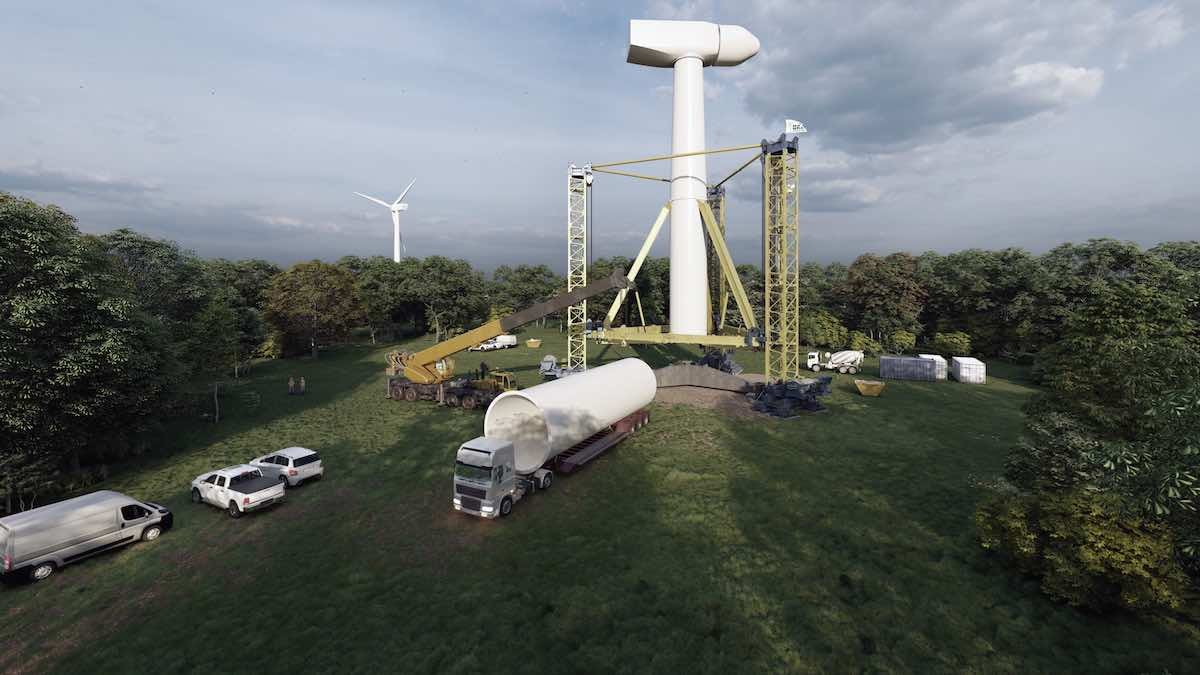
According to Eneko, the future of Nabrawind lies in the full industrialization of BladeRunner, the consolidation of the Nabralift 3.Max tower family in large-scale projects, and the continued expansion of its international network.
In parallel, the company is already working on the type certification of its new tower, with a prototype of the EN182-7.8MW set to be installed in China.
Looking forward, the challenge is not a small one: the company operates in a global market where cost pressures are mounting, but where innovation remains a key differentiator in unlocking new opportunities. Nabrawind has managed to keep a clear vision, innovate with purpose, and demonstrate that competitiveness also depends on the ability to think differently.
When asked how he envisions Nabrawind ten years from now, Eneko sums it up like this:
“A motivated team that keeps innovating with purpose, technologies that become benchmarks and set trends, a strong and recognized position in the market, and profitability that allows us to continue growing.”
Let it be so. And we’ll be here to tell the story.
📬 Want to know more about Nabrawind?
If you’re interested in learning more about Nabrawind and its products or services, you can get in touch with them via:
The contact form on their website (scroll down to the bottom)
Email: info@nabrawind.com
Their LinkedIn page, where they’ve also been sharing highlights from their 10-year journey
You can also mention that you come from Windletter 🙂.
If this isn’t for you, but you know someone who might be interested, feel free to forward them this email. Both Windletter and Nabrawind will be immensely grateful 🙂.
Thank you very much for reading Windletter. If you liked it, I invite you to subscribe, give it a ❤️, forward it by email, share it on social media, or recommend it to other people.
You can follow Windletter profile on LinkedIn, and you can contact me through my LinkedIn profile.
See you in the next one!
This is genuinely impressive work from Nabrawind. The point about expanding installation weather windows from <6 m/s to 15 m/s with Skylift is huge for project economics - I've seen firsthand how weather delays can completely destroy construction schedules. What strikes me as underappreciated here is the intellectual propery strategy: filing 8 PCT applications right out of the gate in 2014 gave them a moat that let them survive the "conservative turn" when others couldn't get funding. Most startups treat IP as an afterthought, but having Iñaki Alti with his 400+ patent portfolio experience was probly the difference between being acquired by Fortescue versus fading into obscurity.