

Windletter by Taniwa - Deepwake: optimising wind farm layout using artificial intelligence
Discover Taniwa, the Spanish company revolutionizing offshore wind layout design through artificial intelligence

Hello everyone and welcome to a new issue of Windletter. I'm Sergio Fernández Munguía (@Sergio_FerMun) and here we discuss the latest news in the wind power sector from a different perspective. If you're not subscribed to the newsletter, you can do so here.
Today’s edition is sponsored by Taniwa, a pioneering Spanish company applying artificial intelligence and deep reinforcement learning (DRL) in industrial environments.
Based in Madrid, and with a multidisciplinary team of engineers, mathematicians and data scientists, Taniwa has developed a tool that is transforming the way wind farm layouts are designed. By using AI and reinforcement learning techniques, the company aims to maximise energy production and reduce the Levelized Cost of Energy (LCOE).
The Deepwake project (that’s the name of the tool) shows how AI and machine learning can tackle one of the biggest challenges in wind engineering: determining the optimal turbine layout to get the most out of the available wind resource.
Stick around, and I’ll walk you through all the details 👇
🧠 Applying artificial intelligence to wind farm layout design
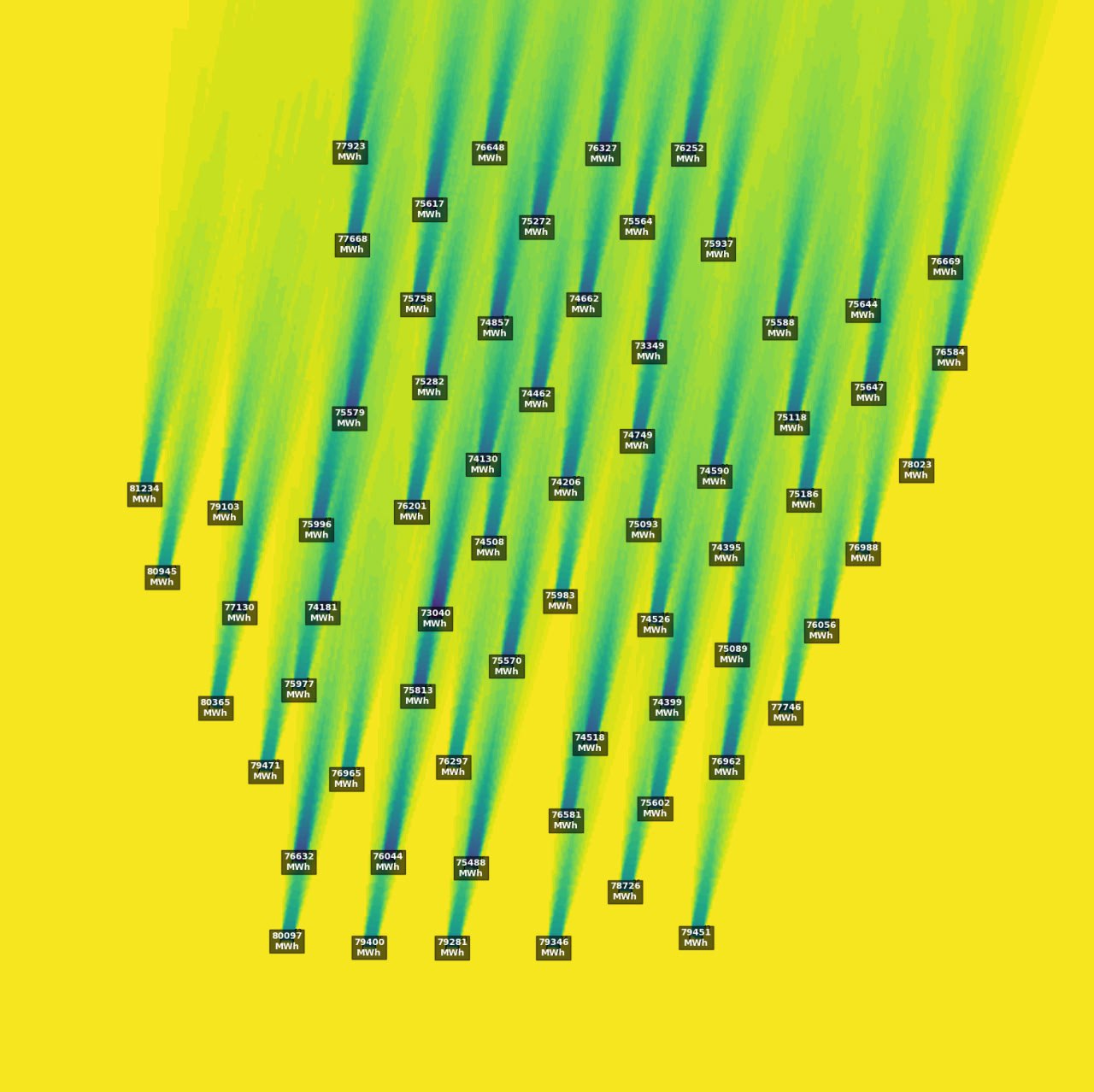
Designing a wind farm is much more than placing turbines on a map. The position of each turbine directly impacts energy generation, since the wind passing through its rotor creates a wake that affects the others, reducing their AEP (Annual Energy Production).
This wake effect can cause global energy losses of between 10% and 25%, known in the industry as wake losses. These wakes have a direct impact on the revenues generated over decades.
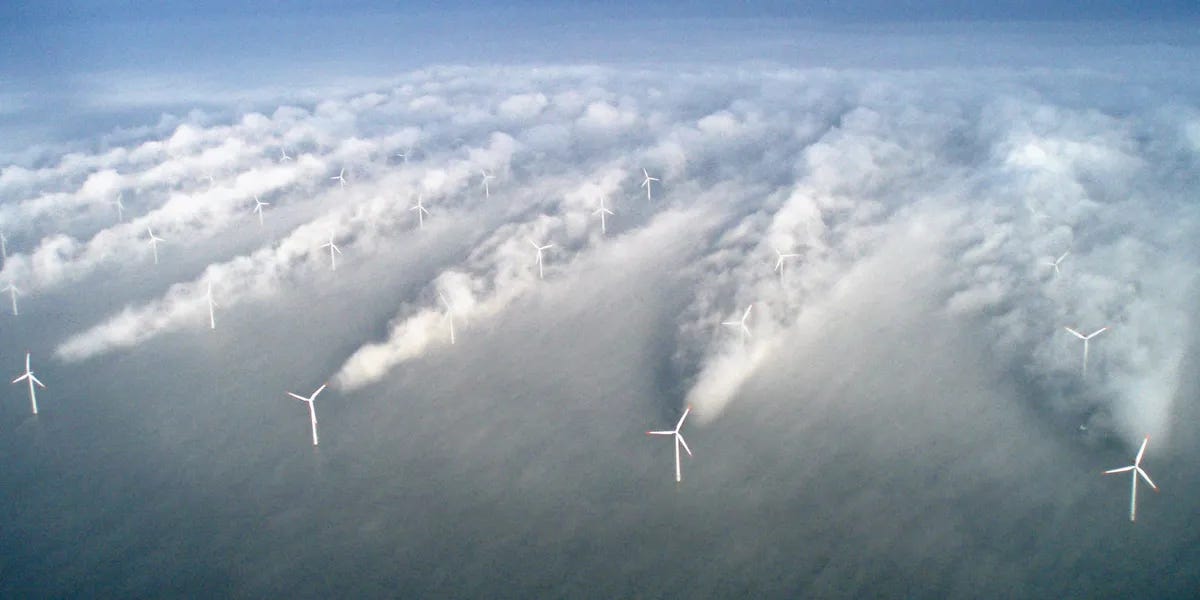
That’s why layout optimisation is a key step in wind farm design.
Taniwa tackles this challenge with an innovative approach: using artificial intelligence models capable of learning optimal layout strategies through simulation and reinforcement learning.
The goal is to find, for any given site, the turbine layout that delivers the highest AEP and lowest LCOE.
🌱 The origins of the Deepwake project
Deepwake began as a proof of concept within Taniwa’s open innovation projects, combining expertise in data science, algorithms and wind engineering.
Its goal was clear: to demonstrate that reinforcement learning can solve the problem of optimal turbine placement in a wind farm.
Optimal layout design, especially in offshore wind, is a non-computable problem, since the number of possible combinations exceeds the limits of traditional computation. Within the defined polygon, the possibilities are virtually infinite, making it impossible to evaluate all of them and choose the best.
In technical terms, this is known as an NP-hard problem, meaning it’s a challenge for which no exact solution can be obtained in a reasonable time through exhaustive computation, due to the sheer number of possibilities.
Deepwake was created to overcome that barrier.
🤖 How Deepwake works
The Taniwa team develops a full digital model of the wind farm, integrating:
Georeferenced site boundaries, terrain conditions, environmental constraints and more.
Data on the turbine model and power curve.
Physical models of the wind resource based on the Global Wind Atlas and WRG.
Wake and turbulence models based on PyWake from the Technical University of Denmark.
The model is given an objective: to minimize variables such as wake losses, construction costs, transport costs, cable costs...
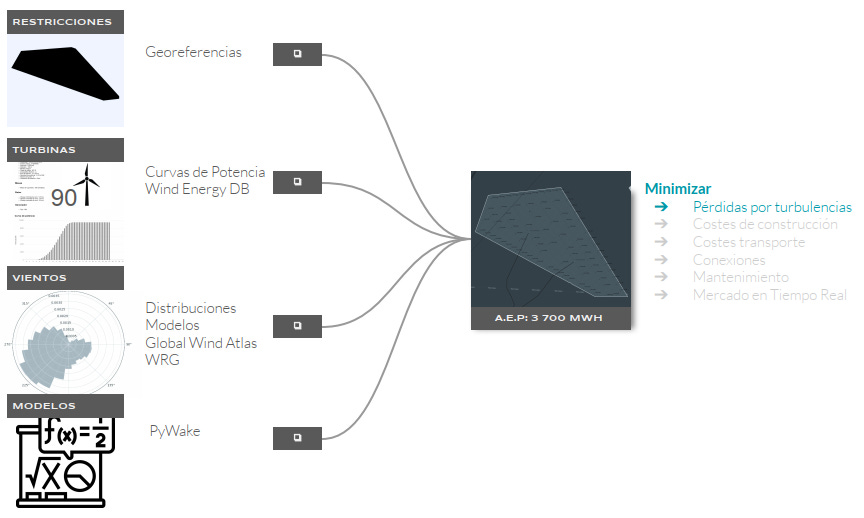
The result is a simulated environment where an AI agent “learns by playing millions of games”, placing turbines, observing the results and adjusting its strategy until it reaches the layout with the maximum energy output at the lowest LCOE.
A simple way to describe it would be this: the AI learns by moving turbines around an invisible board, looking for the most efficient move to maximize energy generation based on what it has learned.
In this way, the number of simulations required is drastically reduced, overcoming the computational limitations and turning the problem into one that can be tackled through intelligent algorithms.
⚡ A validated and competitive commercial product
Deepwake is not just an academic experiment. It has been tested using real data from some of the leading players in the global wind industry.
The results are promising. In pilot projects, the model achieved a 2% improvement in energy production compared to the reference layouts designed by the client’s engineers.
That figure might seem modest, but in a 30-year business model it means a lot of money. In large-scale wind farms, it could translate into millions of euros in additional annual revenue, along with a measurable drop in LCOE.
The system has demonstrated a strong generalization capability, adapting to different turbine models, wind directions and layout configurations, making it a scalable tool suitable for real-world projects.
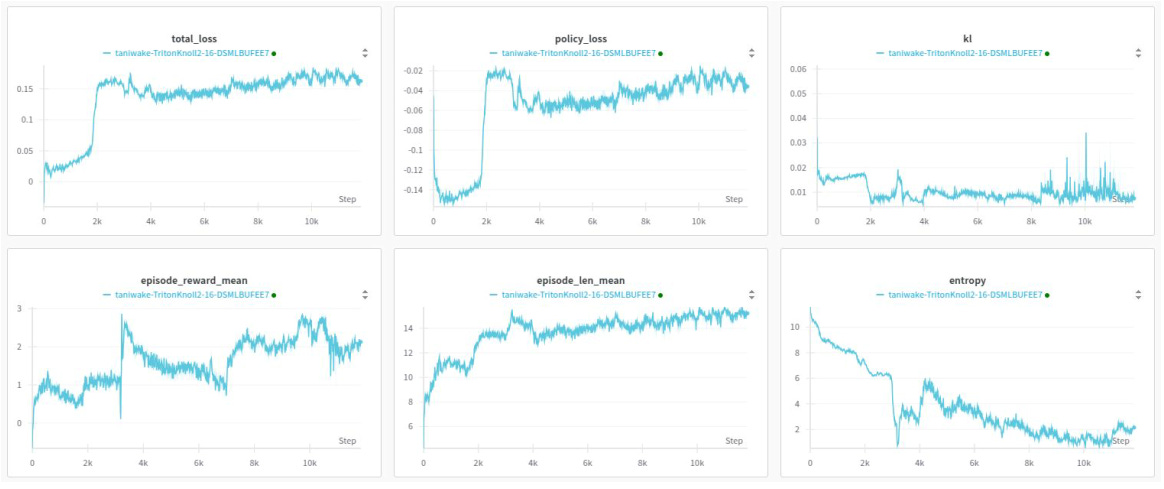
These trials have caught the attention of developers, who see in Taniwa’s tool a new way to approach wind farm design.
💼 A competitive advantage for the future of wind energy
In a context of increasingly demanding and competitive projects, having tools like Deepwake can be the difference between a profitable wind farm and no wind farm at all.
Taniwa’s goal is not to replace engineers, but to empower them. To give them superpowers: the ability to explore more configurations, better understand trade-offs and make decisions based on data and advanced simulations.
The Taniwa team doesn’t just offer a closed solution. They bring their expertise in artificial intelligence and software development to solve real challenges in wind farm design, both offshore and onshore.
After all, every design decision in a wind farm has a direct impact on its business model for the next 30 years.
And choosing precisely today defines tomorrow’s profitability.
📬 Want to know more about Taniwa and its Deepwake tool?
If you’d like to know more about Taniwa and their Deepwake tool, you can contact them through:
The email address hola@taniwa.es
Their LinkedIn page or that of their CEO José Luis Marina
The phone number +34 644 237 135 (Joselu)
Feel free to tell them you’re coming from Windletter 🙂.
And if you’re not interested yourself, but know someone who might be, please forward them this message. Both Windletter and Taniwa will be very grateful 🙂.
Thank you very much for reading Windletter. If you enjoyed it, I invite you to subscribe, hit the ❤️, forward it by email, share it on social media, or recommend it to others.
You can follow Windletter on Twitter and LinkedIn, and you can contact me through my Twitter or LinkedIn profile.
See you next time!